

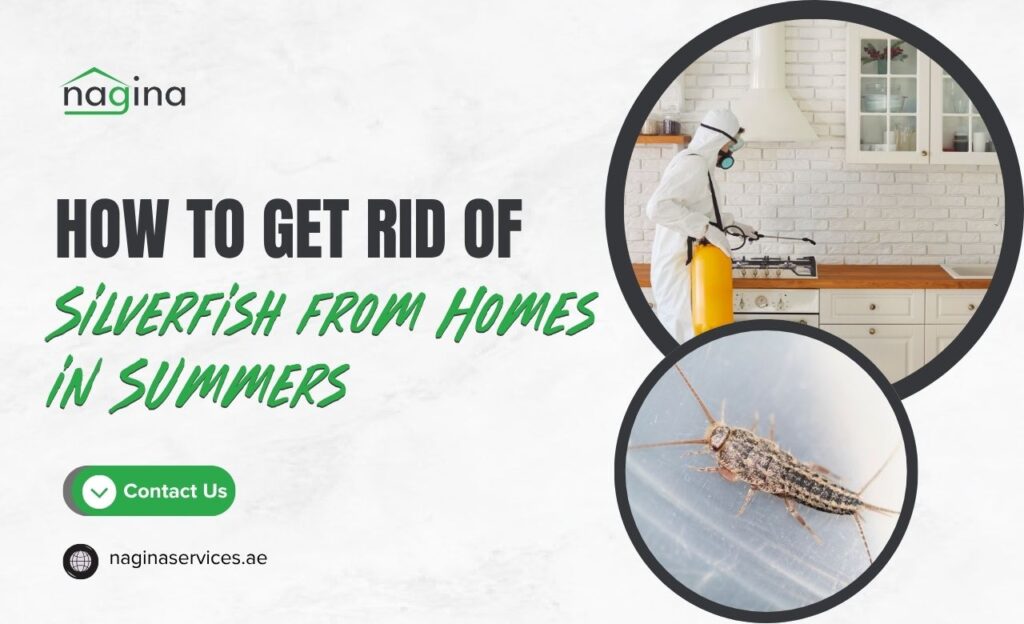
If you’ve ever opened a cupboard at night and seen a small, silver, fast-moving insect dart into a corner, that was probably a silverfish. Most people don’t know what they’re looking at the first time, and many don’t take it seriously. But if you’re seeing them in your Dubai home this summer, it’s worth paying attention.
Silverfish are not dangerous in the way mosquitoes or cockroaches are. They don’t bite, and they don’t carry disease. But they do destroy things quietly and quickly, and Dubai’s summer conditions are exactly the kind of environment they come in.
What Are Silverfish and Where Do They Come From
Silverfish are small, wingless insects with a teardrop shape and a shiny, silver-grey colour. They move fast in a wriggling motion that looks a little like a fish swimming, which is how they got their name. They are ancient insects that have been around for hundreds of millions of years, which partly explains why they are so hard to get rid of.
They don’t travel in from outside the way mosquitoes do. In most cases, silverfish come in through cardboard boxes, secondhand furniture, books, or infested items brought into the home. Once inside, if the conditions suit them, they settle and breed quietly without drawing much attention.
Explore our Best Pest Control Services in Dubai, UAE
Why Silverfish Love Dubai Summers
Silverfish need two things to survive: warmth and moisture. Dubai in summer provides both in abundance. The outdoor heat pushes people to keep their homes heavily air-conditioned. That creates a cycle of humidity build-up in certain areas like bathrooms, kitchens, laundry rooms, and storage spaces where AC airflow is weaker.
Silverfish find these spots and settle in. They are also nocturnal, so they spend the day hiding inside walls, behind furniture, or in stacked paper and cardboard, and only come out when the lights go off.
What makes 2026 particularly notable is that more residents are spending time at home, meaning storage spaces are fuller, humidity from cooking and showering is higher, and the conditions indoors are more favourable for these pests than ever.
Which Areas of Your Home Are Most at Risk
Silverfish don’t spread evenly through a home. They gravitate toward specific spots, and knowing where to look helps you catch the problem early.
Bathrooms are the most common entry point because of the consistent moisture. Kitchen cabinets and pantry shelves attract them because of food sources. Wardrobes and storage rooms where clothes or fabric sit undisturbed for weeks are another favourite.
Bookshelves, filing cabinets, and any area where paper is stacked are also high-risk spots. In Dubai homes and apartments, false ceilings and wall cavities are where silverfish often nest and breed without being seen at all.
What Silverfish Actually Damage
This is where the real problem is. Silverfish eat carbohydrates and starches, which means their menu includes things you care about.
- Books, newspapers, and documents
- Wallpaper and wall paint (they eat the paste behind it)
- Clothes, especially cotton, linen, and silk
- Food in unsealed packaging, like flour, oats, and rice
- Cardboard boxes in storage
- The glue binding your books together
If you have a home library, important documents, or clothes stored in a wardrobe you don’t open often, silverfish can cause real damage before you even notice they’re there.
Signs You Have a Silverfish Problem
Silverfish are shy and fast, so you rarely see many of them at once. But they leave signs behind. Small, irregular holes or yellow stains on paper and fabric are a common sign. You might also notice tiny black pepper-like droppings near books, in cupboards, or along skirting boards.
Sometimes you’ll find shed skin, because silverfish moult throughout their lives and leave their old skins in hiding spots. And of course, spotting one live silverfish usually means there are more hiding nearby.
How Fast Do Silverfish Multiply
This is something most people underestimate. A female silverfish can lay up to 20 eggs at a time, and she can lay eggs several times throughout her life. Silverfish can live for two to three years, which is unusually long for an insect of their size. Their eggs are small and well-hidden, typically tucked into cracks, fabric folds, or beneath flooring.
By the time you spot one or two silverfish, the infestation behind the walls may already be quite established. This is why early action matters more with silverfish than with many other common household pests.
What Doesn’t Work
Before spending money or time on the wrong solutions, it’s worth knowing what won’t solve the problem. Spraying a single insecticide in the bathroom might kill one or two silverfish, but it won’t reach their nesting spots inside walls or behind fixtures.
Sticky traps catch some, but don’t address the root cause. Dehumidifiers help reduce the conditions silverfish prefer, but they don’t eliminate an existing infestation. Home remedies like cedar or lavender may discourage silverfish in very small numbers but have no real effect once they’ve already settled in. The problem with most home treatments is that they deal with the silverfish you can see, not the ones you can’t.
What You Can Do at Home to Reduce the Problem
The most effective approach combines reducing the conditions that attract silverfish with a proper treatment that reaches their hiding places.
On your end, the practical steps are:
- Fix any leaking pipes or taps, especially under sinks
- Keep bathroom and kitchen areas well-ventilated
- Store paper, books, and documents in sealed containers or plastic boxes
- Don’t leave old cardboard boxes stacked in storage for long periods
- Check that your food pantry items are stored in airtight containers
These steps reduce the conditions silverfish need to thrive and can slow down a minor problem. But they won’t clear an infestation that has already taken hold.
Why Professional Pest Control Is the Right Call
Silverfish nest deep inside structures. Getting to them properly requires the right products applied in the right places, which means inside wall cavities, beneath flooring, inside cupboard frames, and along the routes they travel at night.
Professional pest control also identifies why silverfish are present in the first place. If there’s a moisture source behind a wall or a humidity problem in a particular room, treating the surface won’t solve anything for long. A proper inspection finds the cause, not just the symptom.
How Nagina Services Can Help
Nagina Services offers pest control services in Dubai and handled with methods suited to the specific pest and the specific home. Silverfish require targeted treatment in the hard-to-reach areas where surface sprays simply don’t work.
The team at Nagina starts with a thorough inspection, identifying where silverfish are nesting and what conditions in your home are encouraging them. From there, a treatment plan is put in place using safe, eco-friendly products that are effective against silverfish without being harmful to your family or pets.
Nagina is ISO certified company in Dubai, UAE, which means the quality of service follows an internationally recognised standard. The team has handled pest problems across residential homes, apartments, villas, and commercial spaces throughout Dubai, covering areas from Al Qusais and Al Barsha to Dubai Marina and Downtown.
If you’re seeing silverfish in your home this summer, don’t wait for the problem to grow. Early treatment is far easier and less expensive than dealing with a fully established infestation.
Silverfish in Dubai homes are more common in summer than most people realise, and 2026’s indoor living conditions make the problem worse. They are quiet, fast, and destructive. You won’t always see them, but you’ll eventually see what they’ve done to your books, clothes, or pantry items.
The good news is that they can be dealt with effectively when the right approach is taken. Reduce moisture where you can, secure your storage, and get a professional treatment in place to clear the infestation properly.
Contact Nagina Services today and get your home treated before the summer gets worse.