
Rats are more than a nuisance that chews wires and steals food. They live in drains, garbage areas, and storage rooms, and everything they touch on the way can end up in your kitchen, on your floors, and around your family. In a busy city like Dubai, buildings stand close together, and rats can move between properties through pipes and service ducts, which makes them hard to keep out.
The danger comes from the germs rats carry in their urine, droppings, saliva, and fur, as well as the fleas and mites that travel on their bodies. People can get sick by touching contaminated surfaces, eating contaminated food, breathing in dust, or being bitten.
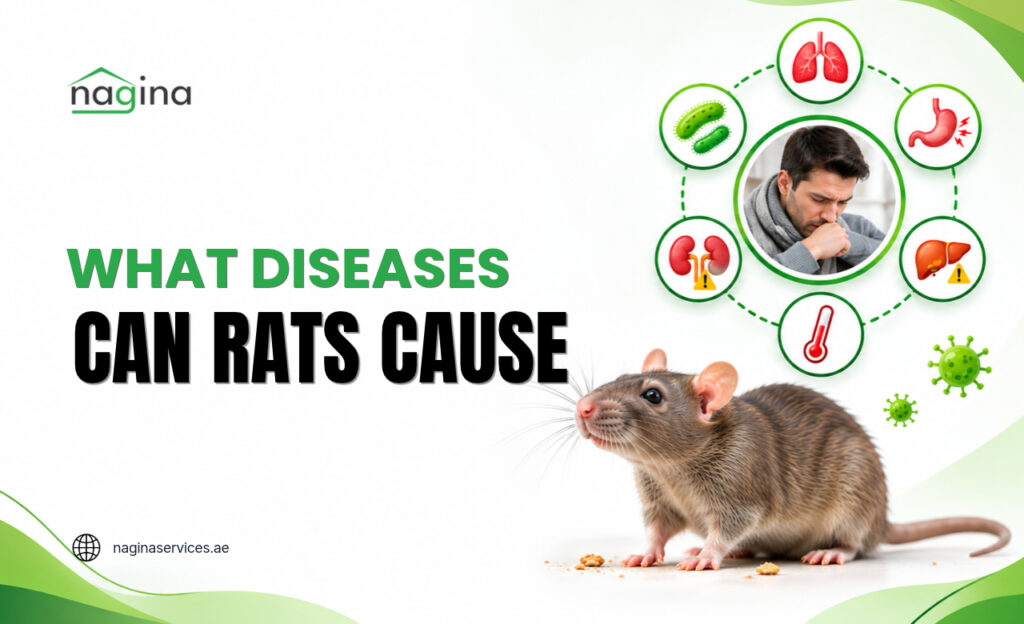
Below we will explain the main diseases linked to rats, how each one spreads, what symptoms to look for, and how to protect your home:
1. Leptospirosis: A Bacterial Infection From Rat Urine
Leptospirosis is one of the most well-known diseases linked to rats. The bacteria live in the kidneys of infected rats and leave the body through urine, which can contaminate water, soil, floors, and food.
A person can get infected when contaminated water or surfaces touch the eyes, nose, mouth, or a cut on the skin. Symptoms often start like the flu, and many people do not realise the cause.
Common signs include:
- High fever and chills
- Severe headache and muscle pain
- Red eyes and vomiting
- Yellow skin and eyes in serious cases
A severe form of the disease, known as Weil’s disease, can damage the liver and kidneys and needs urgent hospital treatment. Leptospirosis is treatable with antibiotics when it is caught early, so anyone with these symptoms after contact with rats or dirty water should see a doctor quickly.
2. Salmonellosis: Food Poisoning From Rat Droppings
Salmonella bacteria are a common cause of food poisoning, and rats are known carriers. When a rat walks over food preparation areas, chopping boards, or open packets, it can leave droppings and urine that carry the bacteria. People then become infected when they eat the contaminated food or touch it and then touch their mouth.
The illness usually starts within hours or a few days and includes diarrhoea, stomach cramps, fever, nausea, and vomiting. Most healthy adults recover within a week, but the infection can be dangerous for babies, elderly people, pregnant women, and those with weak immunity because it can cause severe dehydration.
3. Hantavirus Infections: Illness From Rodent Dust
Hantaviruses are a group of viruses carried by rodents and passed through their urine, droppings, and saliva. The main way people get infected is by breathing in tiny particles of dried droppings and urine that rise into the air when contaminated areas are swept or disturbed, particularly in closed stores, garages, and attics.
Depending on the type of virus, hantavirus infection can cause fever, severe body aches, and, in serious cases, lung or kidney problems that require intensive care. There is no specific cure, which makes prevention very important. Never sweep dry rat droppings with a broom, because this spreads the particles into the air. Dampen the area, wear gloves and a mask, and clean carefully, or ask a professional to do it for you.
4. Rat Bite Fever: Infection From Bites and Scratches
Rat bite fever is caused by bacteria found in the mouths and noses of rats. Despite the name, a person does not always need to be bitten to get sick. The bacteria can also spread through scratches, handling a rat, or eating and drinking something contaminated by rat saliva or urine.
Symptoms usually appear within a few days to three weeks and can include fever, vomiting, headache, joint pain, and a rash on the hands and feet. Without treatment, the illness can lead to serious complications, including heart and joint infections. A rat bite or scratch should always be washed well with soap and water, and medical help should be sought without delay.
Learn more about our Rodent pest control services in Dubai, UAE, and how we deal with rats.
5. Plague: A Disease Carried by Rat Fleas
Plague is a disease most people connect with history, but the bacteria still exist in some parts of the world. It is caused by Yersinia pestis and is spread mainly by fleas that live on rats and other rodents. When an infected flea bites a person, the bacteria enter the body and can cause painful swollen glands, fever, chills, and weakness.
The risk in modern cities is low, and the disease responds to antibiotics when treated early. Even so, plague is a clear example of why rats and their fleas should never be tolerated in a home. Controlling rats also removes the fleas that travel with them, and that protects both people and pets.
6. Murine Typhus: A Fever Spread by Rat Fleas
Murine typhus is caused by bacteria carried by fleas that live on rats. A person becomes infected when flea droppings enter a bite wound, a scratch, or the eyes, or when the contaminated dust is breathed in. It tends to appear in warm and humid regions where rats and fleas are common.
Typical signs include fever, headache, chills, body aches, and a rash that may appear a few days after the illness begins. It is often mistaken for flu or another viral infection, which can delay treatment. The illness is treatable with the right antibiotics, but it can be severe in people who go without care.
7. Rat Hepatitis E: A Rare Liver Infection
Scientists have found a type of hepatitis E virus in rats, and rare human cases have been reported in different countries. The virus can pass from rat droppings to food, water, or surfaces and may cause liver inflammation in people who are infected.
Symptoms include tiredness, nausea, loss of appetite, dark urine, and yellowing of the skin and eyes. Research on this infection is still developing, so it is an important reminder that rat droppings should never be ignored, especially in kitchens and around stored food and water.
8. Allergies and Asthma: Triggered by Rat Allergens
Not every health problem from rats is an infection. Rat urine, droppings, hair, and dander contain allergens that can trigger allergic reactions and asthma. These particles dry out and mix with household dust, so people breathe them in without noticing, particularly in poorly ventilated rooms and storage areas.
Common signs include sneezing, a runny nose, itchy eyes, coughing, and wheezing. Children and people with asthma are most affected, and long exposure can make symptoms worse. Removing the rats and carefully cleaning the contaminated areas is the only reliable way to reduce these allergens.
How Rats Spread Diseases Inside the Home
Rats spread germs in several ways, often at the same time. They leave droppings and urine along their regular paths, which are usually walls, pipes, and cupboard edges. They gnaw on food packets and stored goods, and they carry dirt from drains and garbage on their feet and fur.
Direct and indirect contact are both a risk:
- Eating food that rats have touched or chewed
- Touching surfaces with droppings or urine and then touching your face
- Breathing in dust from dried droppings
- Being bitten or scratched
- Getting bitten by fleas or mites that live on rats
Because rats move mostly at night, many people notice the damage first, such as chewed packaging, droppings, and greasy marks along walls, before they ever see a rat.
Who Is Most at Risk of Rat-Borne Diseases?
Anyone who lives near rats can get sick, but some people face a higher risk than others. Knowing who these people are helps you take extra care in the right places.
Young children are at the top of the list. They play on the floor, crawl on carpets, and put their hands and toys in their mouths, so they pick up germs from contaminated surfaces very easily. Their bodies are also smaller, so an infection can become serious faster than it would in an adult.
Elderly people and anyone with a weak immune system are the next most vulnerable. Their bodies find it harder to fight bacteria and viruses, which means diseases like salmonellosis and leptospirosis can become severe and may need hospital care. Pregnant women should also avoid any food or surface that rats may have touched.
People with asthma or allergies face a different risk, because rat allergens in dust can trigger attacks. Cleaners, maintenance staff, and workers who handle waste, stored goods, or drains are also exposed more often, since they spend more time in the places where rats live.
How to Reduce the Risk of Rat Diseases at Home
Good habits cut down the chance of rats entering and make your home less attractive to them.
A few simple steps make a real difference:
- Store food in tightly sealed containers and never leave it open overnight
- Take out the rubbish every day and keep bins closed
- Seal gaps around pipes, doors, and cable entry points
- Repair leaking pipes and taps, since rats also need water to survive
Keep storage areas tidy so rats have fewer places to hide, and wear gloves and a mask when you clean anything that may be contaminated. Never touch dead rats with bare hands.
When to Call a Professional Pest Control Company
If you see droppings, gnaw marks, grease trails, nests, or hear noises at night, the problem is already established. Store-bought traps and poison can kill a few rats, but they rarely reach the whole nest, and poisoned rats may die in walls and cause a strong smell. A professional treatment finds the entry points, removes the infestation, and helps stop it from returning.
Explore our Expert Pest control services in Dubai, UAE, to find the right treatment for your property.
Nagina Services is a Dubai-licensed and certified pest control company. Our trained technicians inspect your property, remove rats safely, and seal the weak points that let them in, so your family stays protected from rat-borne diseases. Contact us today to arrange an inspection.