Skip to content

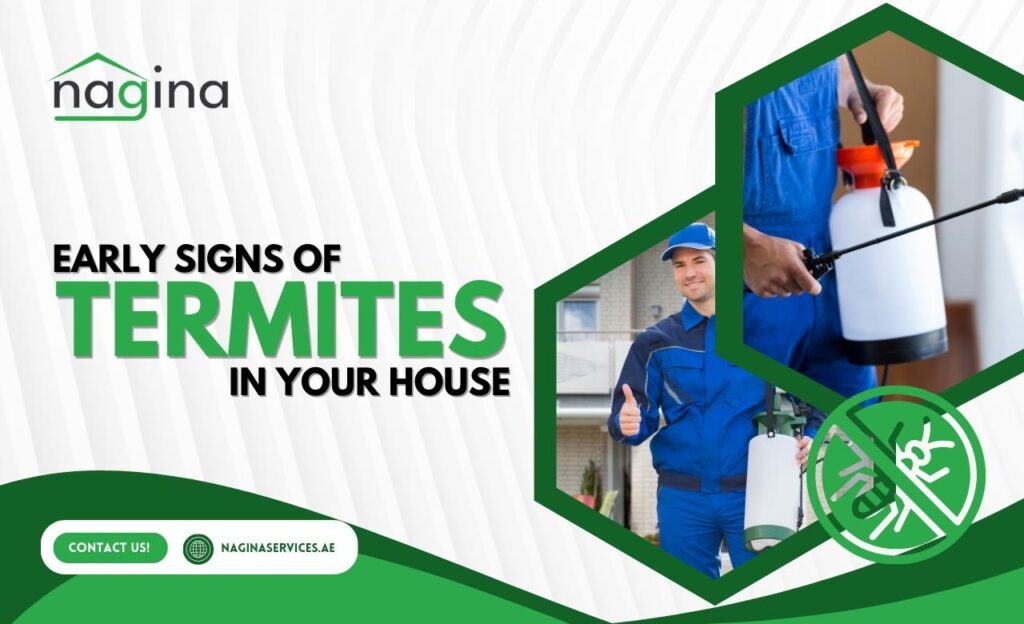
Termites are one of the most destructive pests affecting homes in the UAE, particularly in villas, residential properties, and areas with drywall structures. They work quietly behind walls, inside wooden frames, and beneath flooring, often causing significant structural damage before homeowners even realize there is a problem.
Early signs of termites in your house in Dubai, UAE usually appear silently, and these silent signs should never be ignored because termites can remain hidden for months while causing serious internal destruction. In the UAE climate, termites are active most of the year due to warm temperatures and favorable conditions.
Check out Our Best Anti-Termite Control in Dubai, UAE
Below are ten common early signs of termites, along with practical solutions:
1. Hollow-Sounding Wood
One of the earliest signs of termites is hollow wood. When termites feed inside wooden doors, frames, cabinets, or flooring, they consume the inner layers while leaving a thin outer surface intact. This means the damage is often hidden from the outside and may go unnoticed for a long time.
Wood may appear normal on the surface, but feel weak when pressed. In villas and ground-floor homes in the UAE, door frames and skirting boards are common starting points. If tapping on wood produces a hollow or papery sound, it may indicate that termites have already created internal tunnels.
2. Mud Tubes on Walls or Foundations
Subterranean termites build thin mud tubes along walls, foundations, parking areas, and exterior surfaces. These tubes act as protective tunnels, allowing termites to travel between the soil and the structure without being exposed to heat or open air.
In UAE villas and ground-floor homes, mud tubes are a strong early warning sign because most infestations begin from the soil. These tubes may appear as thin brown lines on walls, near AC ducts, or around foundation edges. Breaking them may reveal live termites inside.
3. Cracked or Bubbling Paint
Termites inside drywall can cause paint to bubble, crack, or peel. This is often mistaken for water damage, especially in humid conditions. However, when no plumbing issue is present, hidden termite activity may be the cause.
As termites feed behind drywall or wooden support structures, moisture and internal pressure build up, leading to surface distortion. Walls may feel soft when pressed, and small cracks can slowly expand over time.
4. Tight Doors and Windows
Doors and windows that suddenly become hard to open or close may indicate termite damage inside wooden frames. As termites eat internal structures, slight swelling or warping can occur.
This issue is common in villas and older homes in the UAE, where wooden frames are exposed to moisture or soil contact. When frames lose structural strength, alignment shifts, causing difficulty in normal movement.
Additional warning indicators include:
- Small cracks appearing around door frames or window edges
- Visible gaps are forming between the frame and the wall
- Soft or spongy wooden edges when touched
- Fine dust or wood particles are collecting near hinges or corners
5. Discarded Wings Near Windows or Floors
Flying termites, also called swarmers, shed their wings after finding a new nesting area. Small piles of transparent wings near windows, doors, balconies, or floors are considered one of the clearest silent signs of termite activity.
Swarming usually happens during warmer periods in the UAE. The presence of discarded wings often means a colony is forming nearby, either inside the structure or close to the property.
6. Clicking or Soft Noises Inside Walls
Termites can produce faint clicking or tapping sounds when they move or feed inside wooden structures. Soldier termites may also create noise by tapping their heads against tunnel walls as a warning signal.
These sounds are difficult to detect and usually become noticeable only in quiet environments, especially at night. Many homeowners ignore these subtle signs, assuming they are normal building sounds.
7. Damaged Drywall or Sagging Surfaces
Termites inside drywall feed on the paper backing and internal wood supports. Over time, this weakens structural integrity and can cause sagging ceilings, bulging walls, or unexplained dents.
Drywall damage may look minor in the beginning, but it can expand quickly if termites continue feeding inside. Soft spots or areas that feel thinner than the surrounding surfaces should be examined carefully.
Additional drywall-related warning signs include:
- Small pin-sized holes are appearing on painted wall surfaces
- Fine powder or dust collects below damaged areas
- Uneven wall texture compared to the surrounding surfaces
- Slight vibration or hollow sound when tapping the wall
- Peeling wallpaper without visible moisture issues
8. Termite Droppings (Frass)
Drywood termites leave behind tiny pellet-like droppings known as frass. These droppings often appear as small piles of sand-like particles near wooden furniture, window sills, or baseboards.
Frass may accumulate slowly and be mistaken for dust. However, repeated appearance in the same location suggests active feeding inside nearby wood.
9. Weak or Crumbling Wood
Wood that breaks easily, appears thin, or crumbles under slight pressure can signal termite feeding activity. Internal damage reduces strength, making structures unsafe over time.
This is particularly common in villa properties where wooden structures are exposed to moisture and soil contact. Staircases, door frames, and outdoor wooden panels are common risk areas.
10. Sudden Increase in Ant-Like Insects
Termites are often confused with ants due to their similar size and appearance. If you notice an unusual number of small, ant-like insects indoors, especially near light sources, it may indicate termite swarmers.
Misidentifying termites as ants can delay proper action. Unlike ants, termite swarmers have straight antennae and equal-sized wings, which are important distinguishing features.
Why Early Detection Is Critical in UAE Homes and Villas
Termites cause damage quietly and continuously. In villas, independent homes, and properties with soil contact, infestations can spread quickly if ignored.
Early detection reduces repair costs, prevents structural weakening, and protects property value. Silent signs inside drywall, wooden frames, and hidden areas require expert inspection rather than guesswork.
Professional Termite Treatment Service in the UAE
DIY solutions rarely eliminate termite colonies because nests are usually hidden underground or deep inside structures. Professional termite treatment service provides detailed inspection, soil barrier treatment, internal wood protection, and long-term monitoring.
Nagina Services offers Professional termite treatment services in Dubai, UAE, focusing on safe, licensed, and structured solutions for villas, homes, and residential properties.
Early professional intervention not only removes active colonies but also helps prevent reinfestation through proper soil treatment and structural protection. Timely termite control protects property value, reduces repair costs, and ensures long-term safety for villas and residential homes across the UAE.
Protect Your Home Before Damage Becomes Severe
Ignoring early signs of termites can lead to expensive structural repairs. Acting at the first warning sign ensures better control and long-term protection.
Regular inspection and professional termite treatment remain the most reliable way to protect homes and villas in the UAE from silent termite damage.