
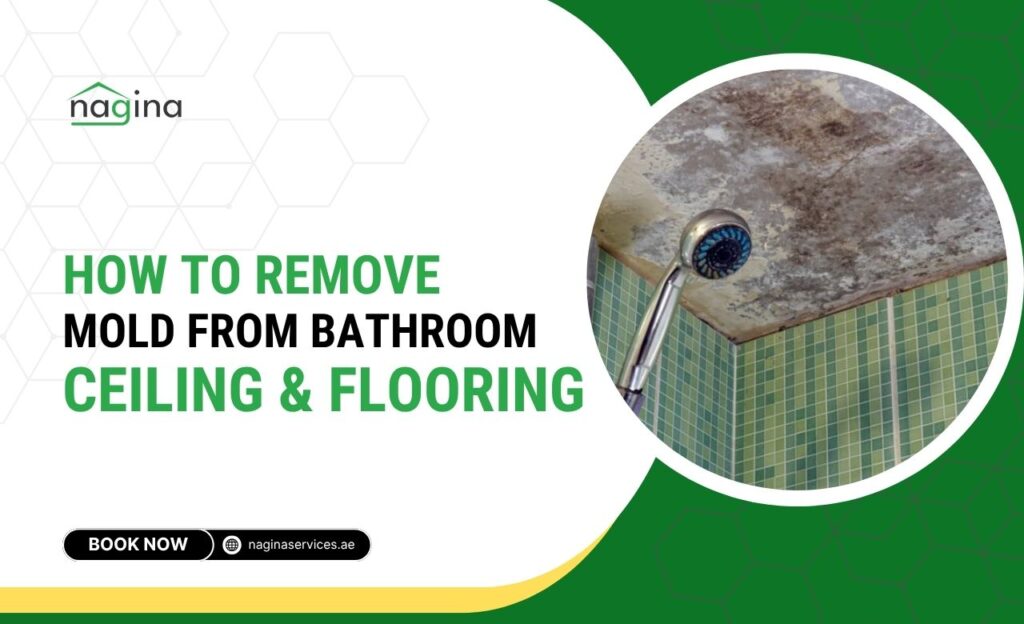
Mold is one of the most persistent and damaging problems that homeowners and residents in Dubai, UAE face. While the city is known for its desert climate, the interiors of bathrooms tell a very different story. Between hot showers, limited ventilation, and the high humidity that comes with Dubai’s summer months, bathroom ceilings and floors become ideal breeding grounds for mold and mildew.
Left untreated, mold does not just look unsightly. It eats into surfaces, weakens structural materials, and releases spores that can trigger serious respiratory issues, allergies, and skin irritation. To get you through everything you need to know about understanding, treating, and preventing mold in your bathroom professionally, including when it is time to call a professional mold removal service in Dubai.
Explore Best Cleaning Services in Dubai – Nagina Services
Why Mold is a Serious Problem in Dubai Bathrooms
Dubai may be a desert city, but the indoor humidity levels inside apartments and villas tell a completely different story. Air conditioning systems that lack adequate dehumidifying capability, combined with steamy hot showers and sealed bathrooms with poor airflow, create a moisture trap. This is exactly the environment that mold thrives in.
Mold spores are always present in the air around us. They only need three things to multiply rapidly: moisture, a surface to grow on, and warmth. In Dubai bathrooms, all three are consistently available. Grout lines between tiles, the paint on ceilings, the silicone seals around bathtubs and toilets, and the corners where walls meet floors are all classic hotspots for mold colonization.
The most common types of mold found in Dubai bathrooms include Cladosporium, which typically appears as black or green clusters; Penicillium, which grows in blue or green patches and spreads quickly; and Stachybotrys chartarum, commonly known as black mold, which is the most toxic and dangerous variety. Each of these presents health risks that worsen with prolonged exposure, particularly for children, elderly residents, and people with asthma or immune deficiencies.
How to Identify Mold in Your Bathroom
Before taking any action, it is important to correctly identify what you are dealing with. Mold and mildew look similar but require different approaches. Mildew is a surface-level fungus that typically appears as flat, powdery patches in shades of gray or white. It is generally easier to clean and does not penetrate deeply into surfaces.
Mold, on the other hand, is fuzzy or slimy in texture and comes in darker colors such as black, green, or dark brown. It grows into the surface material, including grout, drywall, and wood, making it much harder to remove completely.
Signs that you have a mold problem in your bathroom include:
- Black, green, or brown patches on the ceiling, especially in corners or near the exhaust vent area
- Discoloration between tiles or along grout lines on the floor
- A persistent musty or earthy smell that does not go away even after cleaning
- Paint on the ceiling that is bubbling, peeling, or flaking
- Silicone or caulk around the tub, shower, or toilet base that has turned dark or appears stained
- Respiratory symptoms or skin irritation experienced by household members that improve when they leave the home
If you notice any combination of these signs, the mold problem is likely already well established and requires prompt attention.
The Risks of DIY Mold Removal
Many residents attempt to deal with mold themselves using bleach, vinegar, or store-bought mold sprays. While these products can work on minor surface-level mildew, they are almost always insufficient for genuine mold infestations, especially on bathroom ceilings and porous flooring materials.
There are several critical reasons why DIY mold removal often fails or makes the problem worse. First, most cleaning products only kill surface mold without addressing the root cause, which is moisture penetrating deep into the surface. The mold returns within weeks. Second, disturbing mold colonies without proper protective equipment releases spores into the air, which can be inhaled and cause immediate health effects.
Third, bleach, despite its widespread use, does not penetrate porous surfaces like grout, unsealed tile, or drywall. It whitens the surface temporarily while the mold continues growing underneath. Fourth, without identifying and sealing the source of moisture, whether it is a leaking pipe, inadequate ventilation, or condensation, the mold will always come back regardless of how thoroughly you clean.
For anything beyond minor surface mildew, professional mold remediation is the only reliable solution.
The Professional Mold Removal Process: Step by Step
Here is the step-by-step process:
Step 1: Initial Inspection and Moisture Assessment
Every professional mold removal job begins with a comprehensive inspection of the bathroom. Technicians use moisture meters and thermal imaging cameras to detect areas of trapped moisture that are not visible to the naked eye. This step is critical because mold visible on the ceiling or floor surface often represents only a fraction of the actual mold growth happening inside the wall cavity or under the floor tiles.
The inspection also identifies the source of the moisture problem. In many Dubai apartments and villas, common causes include poor bathroom exhaust fan performance, plumbing leaks behind walls or under floors, condensation from cold water pipes in warm ambient temperatures, and grout or sealant that has deteriorated and is allowing water to seep in.
Step 2: Containment of the Affected Area
Before any cleaning begins, professionals set up containment barriers using heavy-duty polyethylene sheeting to prevent mold spores from spreading to other areas of the home. Negative air pressure equipment is used to ensure that air flows into the containment zone rather than outward, keeping spores contained. This is especially important in Dubai apartments where bathrooms are often adjacent to bedrooms or living areas.
Step 3: Personal Protective Equipment
Professional technicians suit up in full protective gear before entering the containment zone. This includes N-95 or higher-grade respirators, disposable Tyvek coveralls, nitrile gloves, and eye protection. This level of protection is non-negotiable when dealing with any significant mold colony, particularly black mold, which releases mycotoxins that are extremely harmful when inhaled or touched.
Step 4: HEPA Vacuuming
Before applying any treatments, technicians use industrial HEPA vacuums to remove loose mold spores from all surfaces, including the ceiling, walls, and floor. Standard vacuum cleaners must never be used for this purpose as they recirculate mold spores through their exhaust. HEPA filtration captures particles as small as 0.3 microns, which is sufficient to trap mold spores effectively.
Step 5: Application of Professional Grade Antimicrobial Solutions
Unlike consumer-grade bleach or mold sprays, professional mold remediation uses EPA-registered antimicrobial and antifungal solutions specifically formulated to penetrate porous surfaces and kill mold at its root. These solutions are applied to the ceiling, all wall surfaces within the bathroom, grout lines on the floor, and around all fixtures and sealant joints.
On bathroom ceilings, which are often painted plaster or gypsum board, the treatment may involve several applications to ensure deep penetration. On tile floors, the solution is worked into the grout lines using specialized brushes and left to dwell for a specified contact time before being removed.
Step 6: Physical Removal and Scrubbing
For stubborn mold that has penetrated surfaces, physical abrasion is required. Technicians use wire brushes on grout lines, sanding on painted ceilings where necessary, and specialized tools to remove mold from silicone joints and caulking. All removed material is placed immediately into sealed, labeled biohazard bags for proper disposal in accordance with Dubai Municipality environmental regulations.
In severe cases where the mold has penetrated deeply into ceiling boards or the substrate beneath floor tiles, those materials may need to be fully removed and replaced. Professional companies can assess this during the initial inspection and advise accordingly.
Step 7: Application of Mold-Inhibiting Sealant
Once the surfaces are thoroughly cleaned and dried, a mold-inhibiting sealant or encapsulant is applied. This creates a barrier that prevents any residual spores from becoming active again and also blocks moisture penetration. On ceilings, this is typically an anti-mold primer followed by specialist paint. On floors, a penetrating sealer is applied to grout lines and any exposed concrete or screed.
Step 8: Drying and Verification
Industrial air movers and dehumidifiers are then used to reduce the moisture content of all surfaces to safe levels. Professional-grade dehumidifiers are essential in Dubai because the ambient humidity, especially in summer, makes natural drying extremely slow and unreliable. Once drying is complete, moisture levels are re-checked with meters to confirm they are within acceptable parameters.
A final inspection is carried out, and many professional companies offer post-remediation testing using air quality sampling to confirm that spore counts have returned to acceptable background levels.
Step 9: Addressing the Root Cause
No mold removal is complete without addressing the source of the moisture that caused the problem. Professionals will repair or replace defective bathroom exhaust fans, recommend plumbing repairs for any leaks identified, reseal grout and silicone joints with high-quality waterproof materials, and advise on behavioral changes such as running exhaust fans for a minimum of 20 minutes after showering.
Mold on Bathroom Ceilings: Special Considerations
Bathroom ceilings present unique challenges in mold removal. Because moisture from hot showers rises and condenses on the ceiling surface, this is often the first place mold appears and also where it grows most aggressively.
Textured or popcorn ceilings are particularly problematic because the uneven surface traps moisture and provides a larger surface area for mold to colonize. In these cases, professional removal typically involves removing the texture coating entirely, treating the substrate, and re-applying a smooth finish with mold-resistant paint.
Gypsum board ceilings that have been saturated with moisture often cannot be effectively cleaned. Professional assessment is needed to determine whether the board can be saved or must be replaced. Signs that a ceiling board needs full replacement include a soft or spongy texture when pressed, sagging or warping, and mold that has grown through to the back surface of the board.
Mold on Bathroom Flooring: Special Considerations
Bathroom floors in Dubai are predominantly ceramic or porcelain tile, which is inherently mold-resistant. However, the grout between tiles is porous and absorbent, making it an ideal surface for mold growth. Additionally, the areas around the base of the toilet, under bath mats, and along the perimeter where the floor meets the walls are consistently damp and are prime locations for mold.
For tile floors, professional cleaning involves:
- Complete removal and replacement of all silicone and caulk at junctions between the floor and walls
- Deep chemical treatment and mechanical scrubbing of all grout lines
- Application of commercial-grade grout sealers to restore water resistance
- Inspection of the floor drain and surrounding area for mold growth within the drain body and P-trap housing
In cases where natural stone flooring such as marble or travertine is involved, the approach changes significantly because these materials are highly porous and reactive to acidic or bleach-based cleaners. Professional technicians use pH-neutral antimicrobial solutions specifically formulated for natural stone to avoid etching or discoloration.
How to Prevent Mold from Returning After Professional Treatment
Once professional mold removal has been completed, the responsibility of prevention falls largely on the property occupant. Here are the most effective prevention measures for Dubai bathrooms.
- Run the bathroom exhaust fan during every shower and for at least 20 minutes afterward. If your existing fan is weak or does not vent outside, upgrading it is one of the most cost-effective investments you can make.
- Leave the bathroom door open after showering to allow moisture to dissipate rather than remaining trapped in the room.
- Wipe down the shower walls, ceiling, and floor with a squeegee or dry towel after each use to remove standing water before it can evaporate and condense.
- Inspect grout and sealant joints every six months and re-apply sealant wherever cracks or discoloration appear.
- Address any plumbing drips or leaks immediately. Even small leaks create persistent moisture accumulation behind walls.
- Consider installing a small dehumidifier in the bathroom if your ventilation is limited, particularly during the summer months when outdoor humidity in Dubai rises significantly.
- Avoid leaving wet towels or bath mats on the floor for extended periods.
- Use mold-resistant bathroom paint, especially on the ceiling, during any redecoration work.
Why Mold Removal in Dubai Requires Local Expertise
Mold remediation is not a one-size-fits-all service. The specific climate conditions in Dubai, including the combination of extreme summer heat, high ambient humidity during the July to September period, and the widespread use of powerful air conditioning systems that create condensation on surfaces, mean that standard approaches used in cooler or drier climates may not deliver lasting results.
Local professionals understand how building construction methods common in Dubai, such as the use of gypsum partitions, specific tile and grout types, and the building configurations of high-rise apartments, affect the behavior of moisture and mold. This local knowledge translates into more accurate diagnosis and more effective treatment.
Additionally, professional companies operating in Dubai are required to use cleaning chemicals and disposal practices that comply with Dubai Municipality regulations, ensuring that the remediation is not only effective but also environmentally responsible.
What to Expect When You Hire a Professional Mold Removal Service in Dubai
When you contact a reputable cleaning company in Dubai for mold removal, the process typically begins with a site visit and inspection, often at no charge. The technician will assess the extent of the mold growth, identify moisture sources, and provide a detailed quotation covering the treatment process, expected timeline, and any recommendations for follow-up work such as plumbing repairs or ventilation improvements.
Work is typically carried out on the same day or within a few days of the initial inspection. For a standard bathroom, the process from inspection to completion usually takes between three and six hours, depending on the severity of the mold and the size of the space. Most reputable companies also offer a guarantee period during which they will return and re-treat at no additional cost if the mold reappears due to any fault in the original treatment.
Get Professional Mold Removal in Dubai Today with Nagina Services
If you have spotted mold on your bathroom ceiling or floor, do not wait for it to spread. Mold grows quickly in Dubai’s indoor climate and becomes exponentially harder to remove the longer it is left untreated. The health risks to your family or tenants, combined with the damage to your property, make swift professional action the only sensible choice.
Nagina Services is your trusted and certified cleaning partner in Dubai, UAE. Our highly trained technicians use professional-grade, eco-friendly antimicrobial treatments and industrial equipment to remove mold completely from bathroom ceilings and flooring, treating the problem at its root so it does not return.
With years of experience delivering cleaning and pest control services to Dubai residents and businesses, Nagina Services brings the expertise, equipment, and commitment that your home deserves. We are fully compliant with all Dubai Municipality standards and back our work with reliable after-service support.
Do not let mold compromise your health or your home. Contact Nagina Services today to schedule your inspection and take the first step toward a cleaner, healthier, mold-free bathroom.