
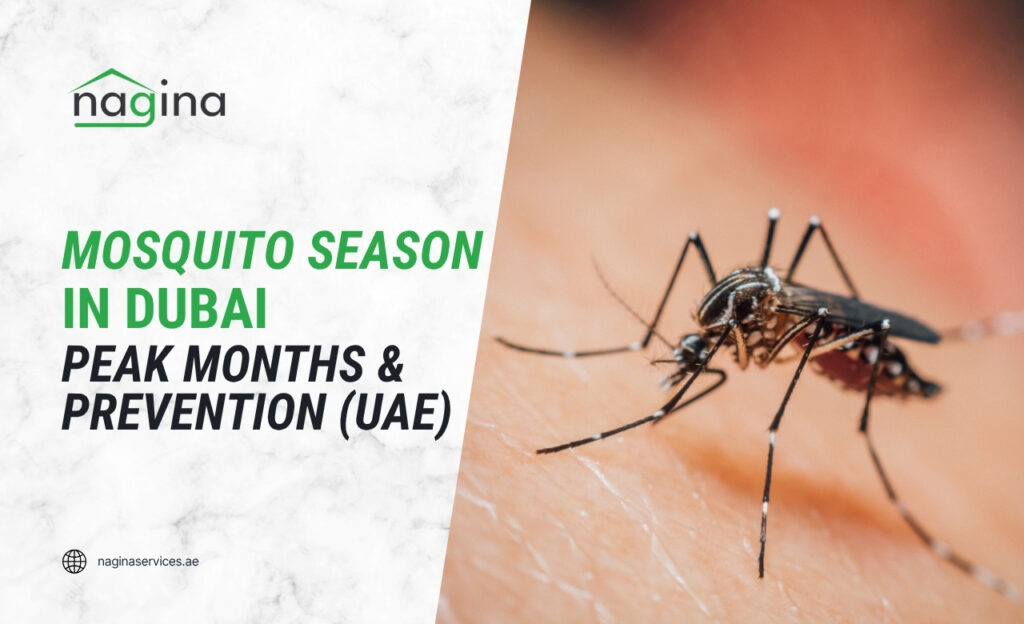
Mosquitoes are one of the most persistent nuisances that residents of Dubai deal with every year. Despite the city’s desert climate, the combination of humidity, irrigation, stagnant water sources, and coastal proximity creates plenty of breeding opportunities for these insects.
For homeowners, business owners, and property managers alike, understanding when mosquito activity rises and how to stop it before it starts can save a lot of frustration and protect health as well.
The mosquito season in Dubai, the months when activity peaks, the species commonly found in the region, the health risks they carry, and practical prevention steps that actually work in a hot, humid environment.
Why Dubai Has a Mosquito Problem at All
Many people assume that a desert city like Dubai should be largely free of mosquitoes since these insects need standing water to breed. In reality, Dubai’s rapid urban development has created countless artificial water sources: irrigation systems for parks and gardens, ornamental fountains, swimming pools, construction sites with pooled water, drainage channels, and even small amounts of water collecting in flowerpots, gutters, and discarded containers.
Add to this the city’s warm temperatures for most of the year and its location along the coast, and you get an environment where mosquitoes can complete their breeding cycle in as little as seven to ten days under the right conditions.
Humidity from the Arabian Gulf also plays a major role, since mosquitoes thrive when moisture levels stay elevated, particularly during the summer months.
Learn more about our Best Mosquito Control in Dubai – Fast, Safe & Guaranteed
Peak Mosquito Months in Dubai
Mosquito activity in Dubai follows a fairly predictable pattern tied to temperature and humidity.
April to June: As spring temperatures rise and humidity begins climbing before the peak of summer, mosquito populations start to build. This period often marks the beginning of noticeably higher mosquito activity around residential communities, parks, and areas near irrigation canals.
July to October: This stretch is generally considered the peak mosquito season in Dubai. High humidity combined with intense heat creates ideal breeding conditions, especially in shaded, moist areas where water tends to collect and evaporate more slowly.
Evenings and early mornings tend to see the highest mosquito activity during these months, since mosquitoes generally avoid the harshest midday heat.
November to December: Activity typically begins to taper off as temperatures cool, though mosquitoes remain present in areas with consistent water sources such as gardens, parks, and low-lying drainage zones.
January to March: Winter and early spring bring the lowest mosquito activity of the year in Dubai. Cooler, drier air slows the breeding cycle considerably, though mosquitoes rarely disappear entirely, particularly in areas close to water features or dense landscaping.
It’s worth noting that within any community, localized conditions can shift this pattern. A villa with a garden that gets watered daily, a compound with an ornamental pond, or a construction site with pooled rainwater can all experience above-average mosquito activity regardless of the broader seasonal trend.
Common Mosquito Species Found in Dubai
Several mosquito species are commonly reported across the UAE, each with slightly different habits.
- Culex mosquitoes are the most widespread in Dubai and are typically active at dusk and during the night. They breed in stagnant water such as blocked drains, unused pools, and water storage containers.
- Aedes mosquitoes, including the species associated with dengue fever, are daytime biters and prefer breeding in small, clean water containers such as flowerpot trays, discarded tires, and buckets.
- Anopheles mosquitoes are less common in urban Dubai but can appear near agricultural or less developed areas with slow-moving water.
Knowing which species is active in a particular area can help determine the right prevention approach, since breeding habits and biting times differ.
Health Risks Linked to Mosquitoes in the UAE
While Dubai does not experience the scale of mosquito-borne illness seen in some tropical regions, health authorities in the UAE do monitor and report cases linked to travel, including dengue fever and, less commonly, chikungunya.
Beyond disease transmission, mosquito bites themselves can cause significant discomfort through itching, swelling, and in some individuals, more pronounced allergic skin reactions.
Children, elderly family members, and pets are often more sensitive to bites and can experience more noticeable irritation. For businesses such as restaurants, hotels, and outdoor venues, a visible mosquito problem can also affect customer experience and reputation, making prevention a practical business concern as well as a health one.
Prevention Strategies That Actually Work
Reducing mosquito populations comes down to two main approaches: eliminating breeding sites and using physical or chemical barriers to reduce bites. Both matter, and neither works particularly well on its own.
1. Eliminate Standing Water
Since mosquitoes cannot breed without water, removing sources of standing water around a property is the single most effective long-term prevention step. This includes:
- Emptying and cleaning flowerpot trays, buckets, and any containers that collect rainwater or irrigation runoff
- Checking gutters and drainage channels regularly for blockages
- Covering water storage tanks and containers securely
- Ensuring swimming pools are properly chlorinated and circulated, since stagnant or poorly maintained pools are a common breeding ground
- Fixing leaking outdoor taps or irrigation lines that create persistent puddles
- Turning over unused items like tires, wheelbarrows, or containers that can collect water after rain or watering
2. Maintain Landscaping and Drainage
Overgrown grass, dense shrubs, and shaded moist areas give mosquitoes places to rest during the day. Trimming vegetation regularly, improving airflow around garden beds, and making sure irrigation systems don’t overwater the same spots repeatedly all help reduce the number of resting and breeding sites near a home or building.
3. Use Physical Barriers
Fitting fine mesh screens on windows and doors keeps mosquitoes from entering living spaces without requiring constant use of sprays or coils. Mosquito nets over beds, particularly for children’s rooms, add an extra layer of protection during peak season.
4. Apply Repellents Strategically
Personal repellents containing DEET or picaridin remain effective for outdoor activity, particularly in the evening hours when Culex mosquitoes are most active. For outdoor seating areas at homes, restaurants, or hotels, citronella candles and mosquito coils can offer some relief, though they work best as a supplement to broader prevention rather than a standalone solution.
5. Time Outdoor Activities Carefully
Since many mosquito species are most active around dawn and dusk, scheduling outdoor gatherings, garden maintenance, or children’s play time outside these windows can meaningfully reduce exposure during peak season.
6. Schedule Professional Treatment Before Peak Season
Community-wide fogging, larvicide treatment in standing water that cannot be removed, and residual insecticide application around entry points are far more effective when applied proactively in spring, before the July to October peak.
Rather than reactively once an infestation is already established. Professional treatments also reach breeding sites that are difficult to access or identify without training, such as sewer lines, retention areas, and dense landscaping.
What Property Managers and Businesses Should Consider
For villas, compounds, hotels, restaurants, and warehouses, mosquito control is not a one-time task. Seasonal treatment schedules, regular inspection of grounds for water accumulation, and staff awareness of early warning signs all contribute to keeping mosquito populations under control throughout the year, not just during the visible peak months.
Outdoor dining areas in particular benefit from a combination of landscaping management, barrier treatments, and scheduled professional visits ahead of the hotter months.
Bringing It All Together
Mosquito activity in Dubai rises sharply between April and October, with July through October generally representing the peak of the season due to high humidity and warm temperatures. While the city’s desert setting might suggest otherwise, irrigation, water features, and urban development have made mosquitoes a genuine seasonal concern for households and businesses across the emirate.
The most reliable way to stay ahead of the problem is a combination of removing standing water, maintaining gardens and drainage, using physical barriers like screens and nets, applying repellents when spending time outdoors, and scheduling professional pest control treatment before the season peaks rather than after mosquitoes have already become a visible problem.
Nagina Services helps homes and businesses across Dubai stay ahead of mosquito season with tailored inspection and treatment plans that target breeding sites, entry points, and outdoor spaces before infestations take hold.
As a Dubai Municipality-approved and certified provider with years of experience in the region, our team uses safe, effective methods suited to Dubai’s climate to keep properties comfortable and pest-free throughout the year.
If mosquitoes have become a recurring issue at your home, villa, or business, reach out to Nagina Services for an inspection and a treatment plan built around your property’s specific needs.