
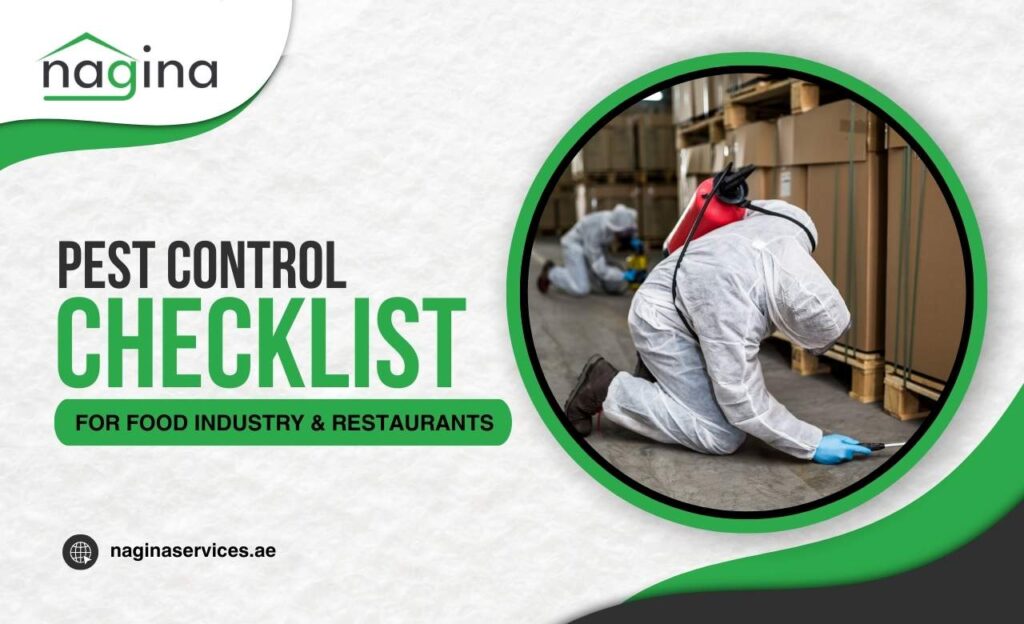
Food safety is the foundation of every successful restaurant, catering unit, cloud kitchen, and food production facility in the UAE. In a market like Dubai and across the Emirates, hygiene standards are strict, inspections are regular, and customer expectations are extremely high. One pest sighting inside a restaurant can lead to fines, temporary closure, damaged reputation, and loss of customer trust.
Nagina Services provides professional pest control services for restaurants and food businesses across Dubai and the UAE, following strict municipality guidelines and industry standards.
Here is the pest control checklist designed specifically for restaurants and food industry businesses operating in the UAE.
1. Conduct a Complete Pest Risk Assessment
The first step in any professional pest control program is a full inspection of the premises. This should cover every area of the restaurant or food facility, not just the dining space.
Areas that must be inspected include:
- Kitchen and cooking lines
- Dry storage rooms
- Cold storage and freezers
- Delivery receiving areas
- Staff lockers and rest areas
- Waste disposal zones
- Outdoor surroundings and drainage systems
During inspection, professionals look for cracks in walls, gaps under doors, leaking pipes, grease buildup, food debris accumulation, and signs of rodent or cockroach activity. In the UAE’s warm climate, pests can breed quickly, so identifying risks early is essential. A documented risk assessment forms the base of a structured pest management plan.
2. Seal All Entry Points and Structural Gaps
Prevention is always stronger than treatment. Restaurants must ensure that pests cannot easily enter the building. Even a small gap under a door, an uncovered drain, or a cracked wall can become an entry route for rodents, cockroaches, and ants.
In busy food businesses where deliveries arrive daily and doors open frequently, physical barriers and structural maintenance play a major role in keeping infestations under control before they begin.
Checklist actions include:
- Installing door sweeps
- Sealing wall cracks and pipe gaps
- Fixing damaged window screens
- Covering floor drains properly
- Ensuring back doors remain closed when not in use
Rodents can enter through very small openings. Cockroaches hide inside wall voids and drainage lines. Proper sealing reduces the risk of infestation significantly and strengthens overall pest defense.
3. Maintain Strict Kitchen Hygiene Standards
The kitchen is the heart of any restaurant and also the most attractive area for pests. Food residue, grease, heat, and moisture create ideal conditions for cockroaches, ants, and rodents.
Daily hygiene practices should include:
- Cleaning behind and under the equipment
- Sanitizing food preparation surfaces
- Emptying trash bins regularly
- Washing floor drains
- Removing food waste immediately after preparation
Grease traps must be cleaned routinely, and spilled ingredients should never be left overnight. Even small crumbs can attract pests within hours.
Professional pest control companies in the UAE provide targeted kitchen treatments that are safe for food environments and compliant with municipality standards.
4. Implement Safe Food Storage Practices
Improper storage is one of the leading causes of pest infestations in restaurants. Food items that are not properly sealed or organized make it easy for insects and rodents to access supplies without being noticed. Storage areas should always remain clean, dry, and well-arranged to reduce hiding spaces for pests.
All food products must be kept in tightly sealed containers instead of open packaging. Items should be stored on racks and never placed directly on the floor. Stock rotation using the FIFO method helps prevent old products from sitting too long and attracting insects.
Every delivery should be inspected carefully before acceptance to ensure there are no signs of infestation inside cartons or packaging. Overstocking must also be avoided, as crowded shelves make inspection difficult and increase the risk of unnoticed pest activity.
5. Manage Waste and Garbage Properly
Waste areas are high-risk zones in any food business. If garbage is not handled properly, it becomes a breeding ground for flies, rodents, and cockroaches.
Waste management checklist:
- Use sealed garbage bins with lids
- Remove waste daily
- Clean and disinfect garbage rooms
- Install fly control devices
- Ensure outdoor dumpsters are positioned away from entrances
In hot UAE weather, waste can attract pests within a short period. Frequent cleaning and monitoring are critical.
6. Schedule Routine Preventive Pest Treatments
Restaurants in the UAE should never wait for an infestation to appear before calling pest control. Regular monthly or quarterly treatments help maintain a pest-free environment and ensure compliance with inspection standards.
Preventive services may include:
- Cockroach gel application
- Rodent bait station installation
- Drain treatment solutions
- Fly light traps
- Ant control around perimeter areas
7. Train Staff to Recognize Pest Activity
Employees are the first line of defense in any restaurant. When staff members understand how pest problems begin and what warning signs to look for, they can report issues immediately before they become serious infestations.
Early detection protects food safety, prevents contamination, and reduces the risk of inspection violations. Proper training should focus on maintaining high hygiene standards, identifying unusual signs such as droppings or strong odors, and following clear reporting procedures.
8. Maintain Proper Documentation and Municipality Compliance
Food establishments in the UAE are subject to regular inspections. Proper documentation is mandatory. Having organized records demonstrates compliance and professionalism during inspections.
Required records typically include:
- Pest control service contracts
- Treatment reports
- Safety data sheets for chemicals used
- Inspection logs
- Corrective action reports
9. Monitor High-Risk Areas Continuously
Certain areas require extra attention because they attract pests more easily due to constant moisture, food particles, warmth, and limited cleaning access that create ideal hiding and breeding conditions.
These include:
- Drains and sewage lines
- Delivery receiving areas
- Ceiling voids
- Outdoor dining areas
- Storage shelves
Regular monitoring devices, such as sticky traps and bait stations, help detect activity early. Early detection prevents major infestations and costly shutdowns.
10. Partner With a Professional Pest Control Company in the UAE
Food industry pest control requires specialized knowledge. Treatments must be safe for food handling environments and approved by local authorities.
A professional pest control provider offers:
- Municipality-approved solutions
- Scheduled preventive programs
- Emergency response services
- Safe chemical handling
- Detailed reporting and documentation
Working with an experienced pest control company ensures that restaurants and food businesses remain compliant, safe, and operational without interruption.
Maintaining a pest-free environment in the UAE food industry is not optional. It is a legal requirement and a business necessity. A structured pest control checklist helps restaurants protect food quality, meet regulatory standards, and maintain customer trust.
Consistent monitoring, proper hygiene, and professional support allow food establishments across Dubai and the UAE to operate confidently while maintaining the highest safety standards.