
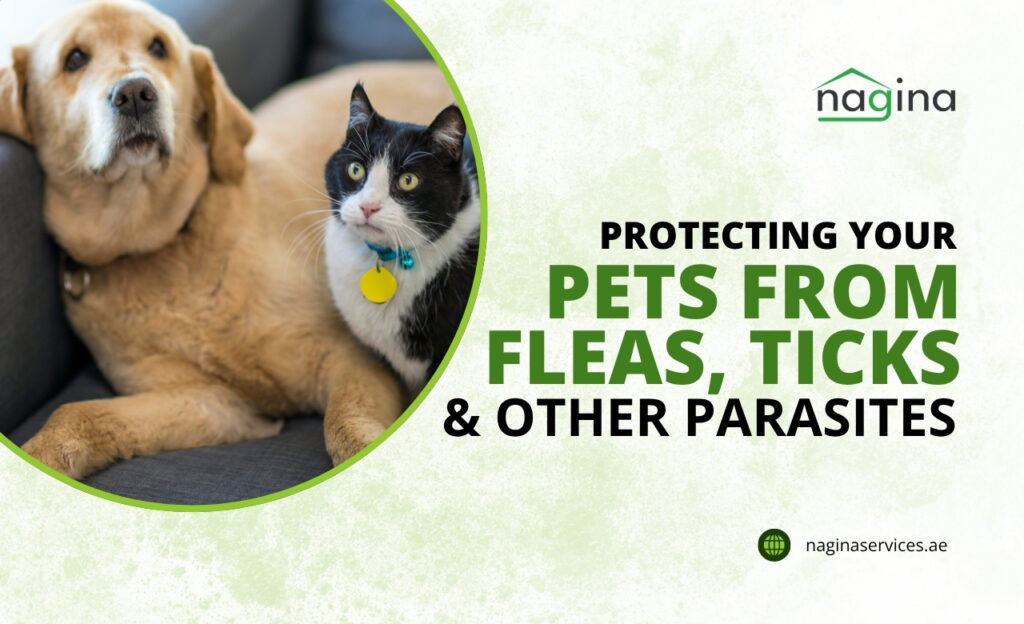
A pet owner in Jumeirah takes her Labrador for an evening walk along a grassy verge, and three days later notices him scratching at his neck nonstop. A cat in an Al Barsha apartment that never leaves the balcony still somehow ends up with fleas jumping through her fur.
Pet parasites in Dubai are not limited to animals that roam outdoors, and by the time most owners spot the problem, the infestation has often already taken hold of both the pet and the home.
Dubai’s climate, much like its effect on mosquitoes and cockroaches, creates conditions where parasites such as fleas, ticks, and mites can thrive for most of the year. Warm temperatures, high humidity in coastal and green residential areas, and the frequent movement of pets between homes, parks, and grooming facilities all contribute to a steady risk of infestation.
These parasites operate, the health risks they pose, and how to protect pets effectively is essential for any pet owner living in the city.
Why Dubai’s Climate Favors Parasites
Fleas and ticks are highly sensitive to temperature and humidity, and Dubai’s environment checks both boxes for large parts of the year. Fleas reproduce fastest in temperatures between 21 and 32 degrees Celsius with moderate to high humidity, a range that Dubai experiences from spring through late autumn.
Even during cooler winter months, indoor heating and the controlled climate of air-conditioned homes can keep flea populations active well past the point where outdoor conditions would naturally suppress them.
Ticks tend to favor slightly cooler, shaded, and humid microenvironments, which they find in Dubai’s parks, landscaped villa gardens, and grassy common areas within residential communities. Ticks often wait on blades of grass or low shrubs and latch onto a passing pet as it brushes past, a behavior that makes even brief walks in green spaces a potential exposure point.
Explore our Pest Control Products (UAE)
Common Parasites Affecting Pets in Dubai, UAE
Here are the common parasites affecting pets in Dubai, UAE:
1. Fleas
Fleas are by far the most common parasite problem reported by pet owners across Dubai. A single female flea can lay up to 50 eggs a day, and those eggs fall off the pet into carpets, sofas, and bedding, where they develop into larvae and eventually new adult fleas. This means a flea problem rarely stays confined to the pet itself. Within a few weeks, an untreated infestation can spread throughout a home’s soft furnishings, making it far harder to eliminate than the original handful of fleas that hitched a ride indoors.
2. Ticks
Ticks are less commonly seen indoors compared to fleas but pose a more serious health risk due to the diseases they can transmit. The brown dog tick, a species well adapted to warm climates and commonly found in the UAE, is particularly concerning because it can complete its entire life cycle indoors, meaning an infestation can persist inside a home or kennel even without direct access to outdoor vegetation.
3. Mites
Various mite species, including ear mites and mange-causing mites, are also a concern for pets in Dubai, particularly cats and dogs with outdoor access or those that interact with stray animals. Mites cause intense itching, hair loss, and skin inflammation, and are highly contagious between pets in close contact.
4. Intestinal Parasites
Beyond skin and coat parasites, pets in Dubai are also at risk from intestinal worms such as roundworms, hookworms, and tapeworms, often transmitted through contaminated soil, fleas, or contact with infected animals. While not directly related to pest infestations in the home, these parasites are frequently linked to flea exposure, since ingesting an infected flea during grooming is one of the most common ways pets contract tapeworms.
Best Pest Control Services in Dubai, UAE
How Parasites Endanger Pet Health
Fleas, ticks, and mites are more than a source of itching and discomfort. Left untreated, they pose genuine risks to a pet’s overall health and, in some cases, to the humans living in the same household.
Flea infestations can lead to flea allergy dermatitis, a condition where a pet develops an intense allergic reaction to flea saliva, resulting in severe itching, hair loss, and skin infections that often require veterinary treatment beyond simple flea removal. In puppies, kittens, or smaller breeds, a heavy flea burden can cause anemia due to blood loss, which in severe cases becomes a medical emergency.
Ticks carry a more serious risk profile because certain species transmit diseases directly into a pet’s bloodstream during feeding. Ehrlichiosis and babesiosis, both documented in dogs across the Gulf region, are transmitted by ticks and can cause fever, lethargy, joint pain, and in advanced cases, organ damage if not diagnosed and treated promptly. Because symptoms can take days or weeks to appear after a tick bite, many pet owners do not immediately connect their pet’s declining health to a tick encountered during a walk weeks earlier.
Mites cause chronic skin irritation that, if left unaddressed, can lead to secondary bacterial infections from constant scratching and open wounds. Ear mites in particular can cause damage to the ear canal and, in severe cases, contribute to hearing problems if the infestation is prolonged.
Parasites also pose a risk beyond the pet itself. Fleas can bite humans, causing itchy red welts, and in rare cases can transmit tapeworm segments to children who have close contact with an infested pet. Certain tick species have also been associated with transmitting disease to humans in other regions, making tick control a household health matter rather than a pet-only concern.
Signs Your Pet May Have a Parasite Problem
Here are a few signs that typically point to an active parasite problem:
- Persistent scratching, biting, or licking at the skin, especially around the neck, ears, tail base, and belly
- Small dark specks in the fur, often called flea dirt, which is actually flea feces and a reliable sign of active flea presence
- Visible ticks, ranging from the size of a sesame seed to a swollen grape depending on feeding time, usually found around the ears, neck, and between the toes
- Hair loss, red or inflamed skin patches, and scabbing, which can point to flea allergy dermatitis or a mite infestation
- Unusual lethargy, reduced appetite, or fever following a known tick exposure
The last of these warrants an immediate veterinary visit rather than a wait-and-see approach, since tick-borne illness can progress quickly once symptoms appear.
Prevention Strategies for Pet Owners in Dubai
- Use veterinarian-recommended preventive treatments year-round. Given how mild Dubai’s winters are compared to temperate climates, parasite prevention should not be treated as a seasonal precaution. Monthly topical treatments, oral preventives, or flea and tick collars recommended by a licensed veterinarian help maintain continuous protection.
- Check pets after outdoor activity. A quick check of the fur, ears, and paws after walks in parks, gardens, or grassy common areas can catch ticks before they have had time to attach and feed, and can also reveal early signs of flea activity.
- Wash bedding and vacuum regularly. Pet bedding, sofas, and carpeted areas where pets spend time should be washed or vacuumed on a consistent schedule, since flea eggs and larvae can survive in these environments even when the pet itself has been treated.
- Maintain garden and outdoor spaces. For villa owners, keeping grass trimmed and removing leaf litter or debris where ticks and fleas can shelter reduces the risk of exposure in a pet’s own outdoor space.
- Limit contact with stray animals. Stray cats and dogs, which are common in certain areas of Dubai, are frequent carriers of fleas, ticks, and mites. Discouraging direct contact, especially for pets that already have weakened immune systems, reduces transmission risk significantly.
- Schedule regular veterinary checkups. Routine visits allow a veterinarian to catch early signs of parasite-related illness, particularly tick-borne diseases that may not show obvious symptoms until they have progressed.
When Home Infestation Requires Pest Control Support
Once fleas have established themselves in carpets, furniture, and cracks in flooring, treating the pet alone is rarely enough to solve the problem. Flea eggs and larvae can survive in a home environment for weeks, continuing to hatch and reinfest a treated pet unless the surrounding environment is also addressed. This is where professional pest control becomes necessary, particularly for households dealing with a heavy or recurring flea infestation.
Professional flea treatment typically targets carpets, upholstery, skirting boards, and other areas where eggs and larvae accumulate, using treatments designed to break the flea life cycle rather than only killing adult fleas present at the time of treatment. For villa owners, outdoor treatment of gardens and shaded areas can also help reduce the tick and flea population in spaces where pets spend time outdoors, lowering the chance of reinfestation after indoor treatment is complete.
Combining veterinary-led parasite prevention on the pet with professional pest control treatment of the home and garden gives the most reliable long-term protection, addressing the problem from both directions rather than relying on one approach alone.
Building a Year-Round Protection Routine
Because Dubai’s climate rarely provides a true off-season for parasites, the most effective approach is a consistent routine rather than reactive treatment after a problem is already visible.
This means maintaining veterinary preventive treatments throughout the year, checking pets regularly regardless of season, keeping indoor and outdoor spaces clean and well maintained, and arranging professional pest control support at the first sign of an infestation rather than waiting for it to spread further into the home.
Pet owners who stay consistent with these habits typically see far fewer parasite problems than those who only take action once scratching, hair loss, or visible fleas have already become obvious.
Protect Your Pets and Home With Nagina Services
Nagina Services provides professional pest treatment in the UAE for homes and gardens across Dubai, helping pet owners break the infestation cycle at its source rather than just treating the symptoms. Our certified team uses safe, pet-friendly treatments for carpets, furniture, and outdoor spaces, targeting fleas and ticks at every stage of their life cycle to prevent reinfestation.
If your pet keeps scratching no matter how many products you have tried, or if you have noticed fleas or ticks around your home or garden, reach out to Nagina Services for an inspection and a treatment plan designed to protect both your pets and your family.