

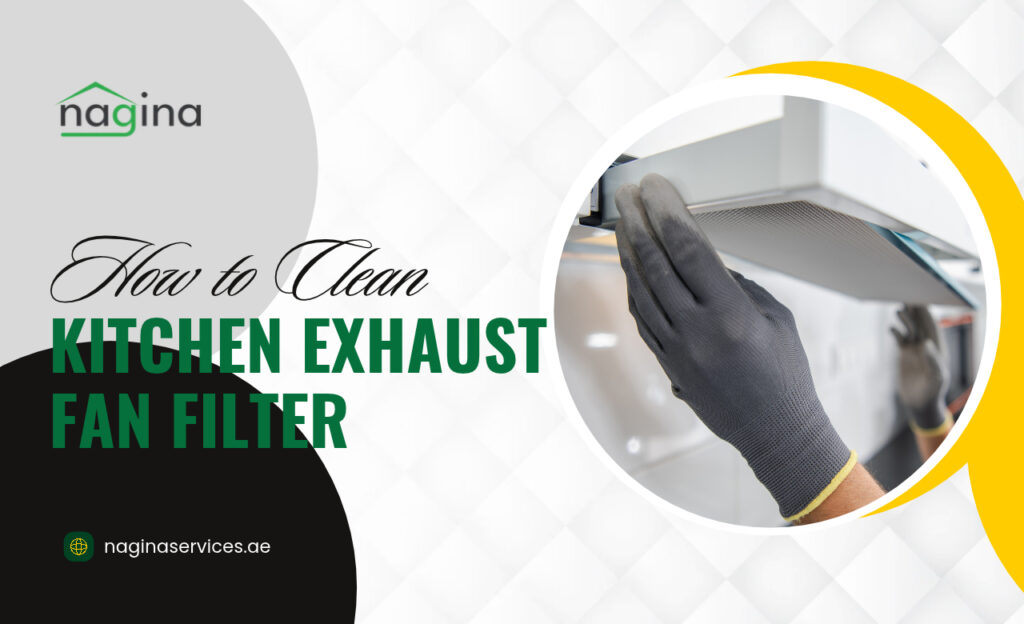
Look at the filter above your cooker right now. If it feels sticky, smells of old oil, or drips brown grease when the fan runs, it has been working far past its limit. A kitchen exhaust fan filter catches the oil, smoke, and steam that every pan releases, and in Dubai kitchens that load is heavy. Daily frying, slow-cooked curries, grilling, and tight, air-conditioned rooms leave very little space for that grease to go anywhere else.
A clogged filter does more than look unpleasant. It pulls less air, so smoke and cooking smells stay in the room. The motor works harder, the grease soaks into the fan housing, and the buildup becomes a real fire risk. It also attracts cockroaches and flies that feed on old oil.
1. Switch Off the Power and Remove the Filter Safely
Start by turning off the fan and the cooker, then unplug the hood or switch off its isolator if you can reach it. Let everything cool down fully, because grease holds heat for a long time. Place newspaper or an old towel on the counter and the stove so falling oil does not stain the surface.
Most metal mesh filters release with a small latch or a spring clip. Press the clip, slide the filter toward you, and lower it carefully. Hold it flat so the trapped grease does not run onto your hands or the floor. Before cleaning, check what type of filter you have.
- Aluminium or stainless steel mesh filters can be washed
- Baffle filters, common in larger kitchens, can also be washed
- Charcoal or carbon filters cannot be washed and must be replaced every 3 to 6 months
If your hood uses a charcoal filter, cleaning it will not bring it back. Replace it and clean only the metal parts around it.
2. Soak in Hot Water and Dish Soap
This is the safest starting point for light to medium grease. Fill a large sink or a wide tub with the hottest water your tap gives, then add a generous squeeze of strong dish soap. Lower the filter in so it is fully covered and leave it for 15 to 20 minutes.
After the soak, scrub gently with a soft brush or an old toothbrush, working along the mesh so the bristles push the grease out instead of flattening the wire. Rinse under running hot water until the water runs clear and no soapy film remains. This method suits filters that you clean every month, because the grease has not hardened yet.
3. Use Baking Soda and Boiling Water for Heavy Grease
When the filter is dark, sticky, and coated for months, plain soap will not be enough. Boil a large pot of water, place the filter in a big basin, and add half a cup of baking soda before pouring the boiling water over it. The mixture fizzes, loosens the oil, and lifts it from the mesh within 10 to 15 minutes.
Work carefully, because the water is dangerously hot, so use tongs and thick gloves. Baking soda is also known to dull aluminium, so use this method mainly on stainless steel filters, and for aluminium, stick to hot water and soap.
Scrub afterwards and rinse in clean water. Even after this treatment, thick old grease can remain trapped deep inside the mesh, which is why many people repeat the process two or three times.
4. Get a Professional Cleaning Service Instead of Doing It Yourself
There comes a point where DIY cleaning costs more in time and effort than it saves. A filter soaked in grease for a year, a hood that has not been opened for months, or a kitchen where you cook every day is usually past what a sink and a brush can fix.
The filter is only the first layer. Grease also settles inside the hood, on the fan blades, in the motor housing, and deep in the duct, and none of that can be reached from the kitchen counter.
This is where professional cleaning makes sense. Nagina Services provides trusted cleaning services in Dubai for homes and commercial kitchens, and the team can take care of your exhaust fan filter along with the surrounding kitchen areas in one visit.
Professionals use commercial degreasers and steam equipment, take the parts apart safely, and put them back so the fan runs quietly and pulls air properly again. You skip the burning hands, the greasy sink, and the repeat cleaning, and you get a kitchen that is safer to cook in.
If you run a restaurant, cafe, cloud kitchen, or catering unit, professional cleaning is not just a convenience. Commercial kitchens in Dubai have to meet food safety and fire safety expectations, and a greasy hood and duct put both at risk. A regular cleaning schedule with a professional team keeps you compliant and protects your business.
5. Spray with Vinegar and a Kitchen Degreaser
For filters that you clean often, a spray can do the job without a full soak. Mix equal parts white vinegar and warm water in a spray bottle, or use a food-safe kitchen degreaser. Spray the filter on both sides, leave it for 10 minutes, then wipe with a microfibre cloth and rinse.
This works well as maintenance between deeper cleans, and it is useful for the hood surface, the buttons, and the edges where fingerprints and splatter collect. It will not remove baked-on grease, so do not expect miracles on a neglected filter. Never mix vinegar with bleach or any other cleaner, because the fumes can be dangerous in a closed kitchen.
6. Clean the Fan Blades and Hood Interior
A clean filter on a dirty hood will clog again quickly. With the filter out, look inside the hood and wipe the underside, the walls, and the visible fan blades with a cloth dipped in warm, soapy water. Wring the cloth well, because water must never reach the motor or the electrical parts.
Use a small brush to reach between the blades and the corners of the housing. Wipe the drip tray or oil cup too, if your hood has one, and empty it before it overflows. If the blades are thick with grease or you notice a wobble, rattling, or burning smell, stop there. That is a sign the motor needs a technician, not a cloth.
7. Dry Completely, Refit, and Test the Fan
Drying matters more than most people think. Wet filters trap moisture, develop a sour smell, and can cause rust on cheaper metal. Shake off the water and leave the filter standing on a rack or towel for at least an hour, or wipe it dry with a clean cloth and let air do the rest.
Once dry, slide the filter back until the clip locks, then restore the power and run the fan on a low setting for a minute. Listen for any rattling and watch for a change in suction. A clean filter should make the fan quieter and noticeably stronger, and you should see smoke leave the area faster when you cook.
8. Build a Cleaning Schedule That Fits Your Kitchen
How often you need to clean depends on how you cook. A schedule you stick to keeps the grease from hardening and saves you from the heavy methods above.
- Heavy daily frying or grilling: clean the filter every 2 to 4 weeks
- Regular home cooking: clean every 1 to 2 months
- Light cooking: clean every 3 months
- Charcoal filters: replace every 3 to 6 months
- Professional deep cleaning of the hood and duct: every 3 to 6 months for homes, and monthly or quarterly for commercial kitchens
A note on the calendar, a reminder on your phone, is the easiest way to keep up with it. Dubai’s humidity and dust also make grease settle faster, so do not wait for a visible problem before you act.
Let the Professionals Handle Your Kitchen Exhaust
You can follow every step above and still end up with a filter that looks better but a hood and duct that stay greasy. A properly cleaned exhaust system protects your health, cuts the fire risk, and keeps cooking smells and pests away.
If you would rather skip the scrubbing and the mess, contact Nagina Services for Professional cleaning services in Dubai, UAE. Their team will handle your kitchen exhaust fan filter and the surrounding kitchen areas, so you get a clean and safe kitchen without the effort.