
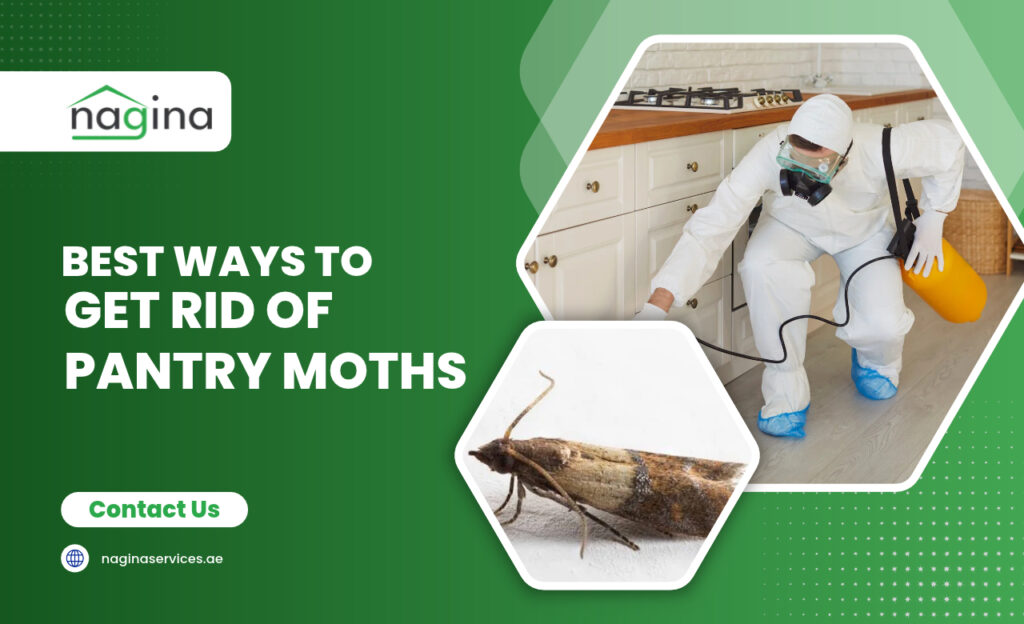
Yo)u open a cupboard, reach for the flour, and see fine webbing across the bag. Tiny moths flutter up when you move the cereal box. Pantry moths are one of the most common food storage problems in Dubai homes, restaurants, and grocery stores, because the warm air keeps their life cycle moving fast all year round.
The bad news is that the moths you see are not the real problem. The larvae hiding inside your dry goods are. A single female can lay 100 to 400 eggs, and the caterpillars that hatch feed quietly inside packets for weeks before anyone notices. That is why a few traps or a spray rarely end the problem for good.
1. Get a Professional Pest Control Service
If you have found webbing or larvae in more than one item, professional treatment is usually the fastest route. Pantry moth larvae can spread into shelf cracks, gaps around cupboard hinges, and the seams of storage containers. Technicians know where these hiding spots are and can treat them in one visit instead of letting the infestation travel from room to room.
Nagina Services handles pest control across Dubai, including stored food pests. Their technicians inspect the kitchen, pantry, and storage areas, identify the species, and apply treatments that reach the larvae and not just the adults.
- You can check their pest control services in Dubai to see what is included before you start cleaning on your own.
2. Find Every Infested Item
Before you treat anything, you need to know what is infested.
Pantry moths prefer dry, starchy, and slightly sweet foods, so check these first:
- Flour, semolina, and baking mixes
- Rice, pasta, and dry cereals
- Nuts, seeds, and dried fruit
- Spices, dried herbs, and tea
- Chocolate and cocoa powder
- Pet food and bird seed
Look for small silk threads, clumps of food stuck together, and tiny larvae that look like pale worms. Check the seams of packets and the corners of boxes, because that is where pupae are often attached.
3. Throw Out Infested Food Properly
Anything with webbing or larvae should go out, even if it looks fine on the top layer. Seal the item in a bag before carrying it to the bin so adults do not escape during the walk. Take the bag straight outside to a closed outdoor bin.
Food that looks clean but sits next to an infested packet may already carry eggs. If you are unsure, dispose of it too. Replacing a few packets costs far less than losing weeks to a spreading infestation.
4. Clean and Vacuum the Storage Space
Empty every shelf, drawer, and cupboard that held food. Vacuum the corners, cracks, and shelf edges with a narrow nozzle, then empty the vacuum bag or canister into a sealed bag straight away.
Wipe the surfaces with hot soapy water and dry them fully. Pantry moth larvae can survive in tiny gaps even after a surface looks clean, so spend extra time on joints and corners.
Cleaning alone rarely finishes the job. Larvae that were already inside sealed packets will survive a wipe-down and emerge later.
5. Freeze or Heat Treat Dry Goods
Freezing is one of the most reliable home methods for killing every stage of the moth. Place flour, grains, nuts, and other dry items in the freezer at about minus 18 degrees Celsius for at least four days. Heat also works. Spread items on a tray and warm them in an oven at around 60 degrees Celsius for 30 minutes, checking the temperature with a thermometer.
These methods only protect what you treat. Any larvae or eggs you miss will keep developing, and a single missed packet can restart the cycle. Repeating the process for every bag of food takes a lot of time and freezer space.
6. Use Pheromone Traps
Pheromone traps attract adult male moths and catch them on a sticky surface. They are useful for checking whether the infestation is still active. If you catch moths every week, larvae are still developing somewhere in your home.
Traps do not kill larvae, and they only catch males. Females that were already mated will continue laying eggs, so traps should be used as monitoring tools rather than the complete solution.
7. Vinegar and Essential Oil Sprays
Some people spray vinegar, peppermint oil, or bay leaves around shelves and cupboards to deter moths. A diluted vinegar spray can wipe down surfaces and remove residue that attracts moths. Essential oils may repel adults for a short time, but there is little evidence that they eliminate an established infestation.
The main limitation is that sprays cannot reach larvae inside sealed packets or webbing deep within cracks. You may notice fewer moths for a few days, then find new webbing the following week.
8. Why Pantry Moths Keep Coming Back in Dubai
The life cycle of a pantry moth is short in warm kitchens, and that is what makes home treatment so difficult. The stages below show where the insects hide and how long each stage lasts in typical warm conditions.
| Life Stage | Approximate Duration | Where It Hides |
|---|---|---|
| Egg | 3 to 5 days | Inside food packets and on seams |
| Larva | 2 to 4 weeks | Inside flour, cereal, and nuts |
| Pupa | 5 to 10 days | Cracks, shelf edges, and box corners |
| Adult | 1 to 2 weeks | Flies around light and stored food |
Because the full cycle can finish in about four to six weeks, a treatment that stops only the adults leaves the next generation untouched. Dubai’s warm air keeps this cycle moving faster than many people expect.
9. Signs You Need Professional Help
Call a professional if any of these apply to your home or business:
- Moths return within two weeks of cleaning
- Webbing appears in several cupboards or rooms
- You find larvae in newly bought packets
- The infestation has spread to pet food or bird seed
- You run a restaurant, bakery, or store where food safety matters
- You have tried several home methods without lasting results
These signs usually mean the larvae have moved beyond the first cupboard, and a complete inspection will save time.
10. What Professional Treatment Involves
A professional visit starts with a full inspection of storage areas, cupboards, and the spaces behind appliances. The technician identifies the species, locates the active hiding spots, and recommends which items must be discarded.
Treatment is then applied to cracks, joints, and storage zones where larvae and pupae survive. Follow-up visits confirm that the cycle has been broken. The advantage is that the treatment targets the full life cycle in one plan. You do not have to guess which stage is active or repeat the same steps for weeks.
Stop Pantry Moths Before They Spread
A few moths in the kitchen can turn into a full infestation within a month, and the webbing they leave behind attracts more of them. If you have already found larvae, a professional inspection is the quickest way to protect your food and your storage areas.
Contact Nagina Services today to schedule an inspection for your home or business. Their team will find the source, treat the hiding spots, and help you keep your pantry free from pantry moths for the long term.