A pool can look perfect on Friday and turn green by Monday. Strong sunlight burns off chlorine fast, warm water helps algae multiply, and every swimmer brings sweat, oil, sunscreen, and dust into the water.
When one task is skipped, the problem rarely stays small, because the water, the filter, and the pump all depend on each other. A good maintenance checklist keeps those parts working together. It tells you what to check every day, what to test every week, and which jobs need attention every month or every season.
Here is the full checklist, explains why each step matters, and shows where pool care becomes risky for people without training:
Daily Swimming Pool Maintenance Checklist
Daily tasks take only a few minutes, but they stop most problems before they begin. Doing them at the same time each day, ideally in the morning before anyone swims, makes the routine easy to remember and gives you a clear picture of how the pool looks when it is calm and clean.
1. Skim the Surface
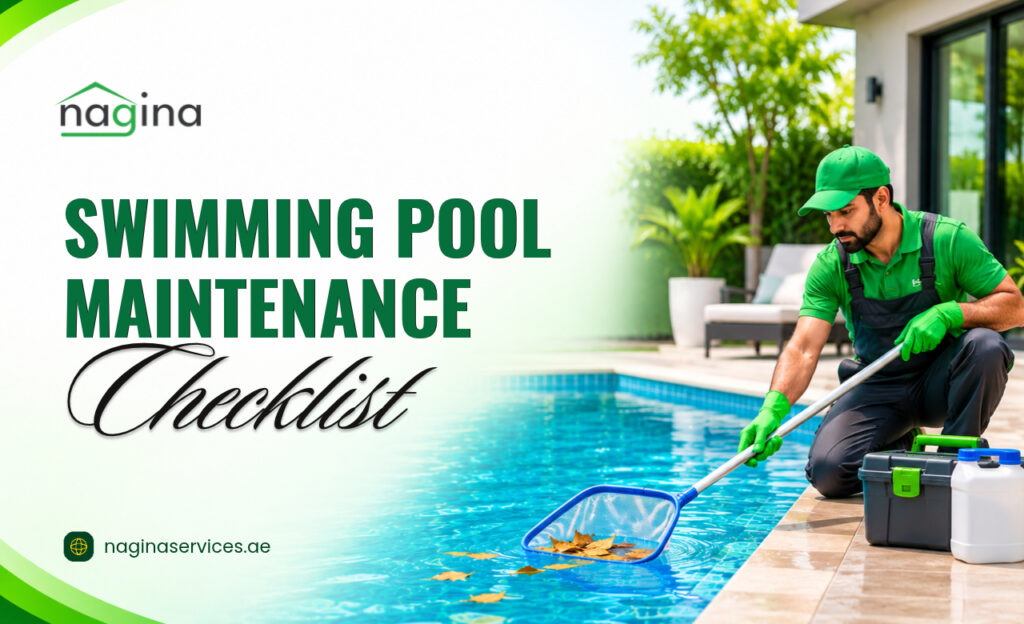
Remove leaves, insects, hair, and floating dirt with a skimmer net before they sink to the bottom. Debris that sits in the water breaks down and feeds algae, and it also uses up your chlorine.
Skimming each morning keeps the water cleaner and reduces the load on the filter. After windy days, check the corners where the wind pushes dirt, because these spots collect the most debris and are easy to miss.
2. Check the Water Level
The water should sit around the middle of the skimmer opening. If it falls too low, the pump pulls in air and can run dry, which damages it quickly. If it rises too high, the skimmer cannot work properly.
Heat and evaporation lower the level faster than most owners expect, so check it every day. Top up slowly with a hose, and never leave a hose running without watching it, since overfilling is just as harmful as running low.
3. Run the Pump and Circulation
Most residential pools need the pump to run for 8 to 12 hours a day so the entire volume of water passes through the filter. In hot weather, longer running time helps.
Listen for unusual noises and look for leaks around the pump, since both are early signs of trouble. Also check that water is flowing back into the pool from the return jets, because weak flow often points to a blocked basket or a dirty filter.
Explore our Swimming Pool Cleaning Service in Dubai, UAE to keep your pool clean, balanced, and ready to use.
4. Check Water Clarity and Smell
The water should look clear enough to see the main drain at the deepest point.
Watch for these warning signs:
- A cloudy or milky look
- A green or yellow tint
- A strong chemical smell
- Slimy walls or floor
A strong chlorine smell does not mean the pool has too much chlorine. It usually means the chlorine is bound with waste and the water needs treatment. Any one of these signs on its own is a reason to test the water that same day, because problems grow much faster in warm weather than they do in cool weather.
5. Inspect Safety Features
Safety checks matter most in homes with children and pets. Confirm each of these every day:
- Gates and fences latch securely
- Pool covers are in place when the pool is not in use
- Drain covers are intact and not cracked
- Rescue equipment is easy to reach
Take a moment to check the ladder, handrails, and steps for loose fittings as well. A wobbly rail or a missing drain cover is a serious risk, and it is much easier to fix before an accident than after one.
Weekly Swimming Pool Maintenance Checklist
Weekly work is where the water quality is truly controlled. Pick one fixed day for these jobs and write the readings down each time, because a record of your numbers shows trends that a single test cannot show.
1. Test and Balance the Water
Test these values at least once a week, and two or three times a week in hot weather or after heavy use:
- pH level
- Free chlorine
- Total alkalinity
- Calcium hardness
Adjust one chemical at a time, wait for it to circulate, and then retest. Adding several chemicals together or in the wrong order can create new problems. Take the water sample from about elbow depth and away from the return jets, so the reading reflects the whole pool and not just one spot.
2. Brush the Walls, Steps, and Waterline
Algae and scale start on surfaces where water moves slowly, such as steps, corners, and behind ladders. Brush all surfaces each week so these spots do not turn into stubborn patches.
Pay special attention to the waterline, where oil and dirt collect. Use the right brush for your pool surface, since a hard brush on soft plaster or vinyl can scratch it and make it easier for algae to grow.
3. Vacuum the Pool Floor
Vacuum fine dirt and debris that settles on the bottom, because the skimmer cannot catch everything. Work slowly so you do not stir up dust and send it back into the water.
Overlap each pass like mowing a lawn, and check the filter pressure afterwards, because heavy vacuuming sends a lot of dirt through the system.
4. Empty the Skimmer and Pump Baskets
A full basket blocks water flow and forces the pump to work harder. Empty both baskets and check them for cracks, since a damaged basket allows debris into the pump.
Turn the pump off before you open the pump basket, and make sure the lid and seal sit properly when you close it, or the pump can pull in air.
5. Shock the Pool
Shocking means adding a high dose of sanitiser to destroy bacteria, algae spores, and waste that normal chlorine cannot clear.
Do it once a week, or at these times:
- After heavy pool use
- After rain or a dust storm
- After any cloudy or green water problem
Always shock in the evening so the sun does not burn off the chlorine. Keep swimmers out of the pool until the chlorine level drops back to a safe range, and never mix shock products with other chemicals, since this can cause dangerous reactions.
6. Check the Filter Pressure
Read the pressure gauge on the filter. When it rises 8 to 10 psi above the clean starting level, the filter needs backwashing or cleaning. A clogged filter reduces circulation and lets dirt return to the pool.
Note the pressure right after a clean, so you always have a starting number to compare with, and watch for a sudden jump, which can point to a blockage in the system.
Monthly Swimming Pool Maintenance Checklist
Monthly work looks deeper into the parts of the pool you cannot easily see. These jobs take longer than the daily and weekly tasks, so set aside an hour or two and do them when the pool is not in use.
1. Deep Clean the Filter
Even with regular backwashing, oils and fine particles build up in the filter. Clean cartridge filters with a proper filter cleaner, and check sand and media filters for signs that the media is worn out.
A properly cleaned filter protects the pump and improves water clarity. Rinse cartridges gently with a hose and never use a pressure washer, since high pressure can tear the filter material and make it useless.
2. Inspect the Pump and Seals
Look closely for these problems:
- Water leaks around the pump and pipes
- Cracks, rust, or loose connections
- Worn O-rings and seals
- Unusual noise or vibration
Small leaks grow quickly and can pull air into the system. Catching them early saves expensive repairs. Lightly lubricate rubber seals and O-rings with a suitable pool lubricant, because dry seals crack and fail much sooner than seals that are cared for.
3. Check Lights and Electrical Equipment
Inspect pool lights for moisture, flickering, or cracked lenses. Make sure all electrical connections are dry and covered. Water and electricity are a dangerous mix, so any fault should be handled by a qualified person.
Switch off the power before any inspection near the pool equipment, and never touch a damaged cable or a light with water inside it.
4. Clean the Tile Line and Deck
Scale and body oils form a hard ring along the waterline that normal brushing cannot always remove. Clean the pool deck as well, because dirt and dust on it wash straight back into the water.
Use a cleaner made for pool tiles, since harsh household products can damage the grout and change the chemical balance of the water.
5. Test for Stabiliser and Hardness
Check chlorine stabiliser and calcium hardness once a month. Stabiliser protects chlorine from sunlight, but too much of it makes chlorine weak, and too little means chlorine disappears in hours.
If the stabiliser is too high, the only fix is to replace part of the water, which is why it should never be added without testing first.
Seasonal and Yearly Pool Tasks
Some jobs only come up a few times a year, but they decide how long your pool and equipment last. Planning them ahead of time avoids rushed repairs in the middle of the swimming season.
1. Prepare for the Hottest Months
Before summer, service the pump, check the filter, and test every chemical value. Heat increases chlorine use and algae growth, so the pool needs a stronger routine, more frequent testing, and longer pump time.
Stock up on the main chemicals early, and check that your test kit has not expired, since old reagents give wrong readings.
2. Inspect the Pool Structure
Walk around the pool and look for these signs:
- Cracked or loose tiles
- Loose coping stones
- Rough plaster or stains
- Water loss faster than normal evaporation
A pool that loses water too quickly may have a hidden leak, and finding it early prevents damage to the surrounding area. A simple bucket test can show whether the water loss is from evaporation or from a leak, but locating the leak itself usually needs special equipment.
3. Service Equipment Once a Year
Pumps, heaters or chillers, automation, and chemical feeders all need a yearly inspection. Worn parts are cheaper to replace before they fail than after they damage something else. Keep a note of when each piece of equipment was last serviced, so nothing is forgotten and warranty conditions are met.
4. Plan a Deep Clean
Once or twice a year, the pool benefits from a full deep clean, including scrubbing surfaces, treating stains, cleaning the filter system, and resetting the water balance. This is the kind of job that is best done with proper equipment and training.
A deep clean also gives a clear view of the pool floor and walls, so problems like stains, rough patches, and worn tiles are noticed before they spread.
Ideal Pool Water Levels at a Glance
The daily and weekly checklist depends on a few target numbers that most residential pools aim for. These ranges can differ slightly depending on pool type and equipment, so always follow the guidance for your own pool.
- pH level: 7.2 to 7.8, which keeps the water comfortable for skin and eyes and lets chlorine work properly
- Free chlorine: 1 to 3 ppm, enough to destroy bacteria and algae without irritating swimmers
- Total alkalinity: 80 to 120 ppm, which stops the pH from swinging up and down
- Calcium hardness: 200 to 400 ppm, which protects plaster and equipment from etching and scale
- Chlorine stabiliser (cyanuric acid): 30 to 50 ppm, which shields chlorine from strong sunlight
These numbers work as a chain. If the pH drifts, chlorine stops working properly, and if alkalinity is wrong, the pH keeps swinging back. Fixing one value without checking the others is one of the most common reasons pool water never stays stable.
Accurate testing matters just as much as the target numbers. A cheap strip can give a rough idea, but readings can change with light, wet fingers, or an old strip, so a reliable test kit gives you a much clearer picture before you add anything to the water.
The Hidden Risks of Doing Pool Maintenance Yourself
Pool care looks simple until something goes wrong. Pool chemicals are strong, and a small mistake in handling or dosing can cause burns, breathing problems, or a ruined pool.
Mixing different chlorine products, or adding acid carelessly, can release harmful gas, and chemicals should always be added to water and never the other way round. Even storing them badly, in a hot room or close to each other, can create a real danger at home.
Water chemistry is also harder than it appears. Adding too much of one chemical throws off the others, and the pool can swing between cloudy, green, and scaled water for weeks.
By the time you notice, algae may have already stained the surface, and the filter may be overloaded, which means a much bigger and more expensive recovery than regular care would have cost.
Equipment faults carry another danger. A pump that runs dry, a filter that is never cleaned properly, or a damaged light can turn into an expensive repair or an electrical hazard. People without training often miss the early warning signs because the damage starts of sight, inside the pipes, the motor, and the filter.
Poorly treated water can also affect the people who use it. Water that looks fine but is not properly sanitised can cause skin rashes, red eyes, ear infections, and stomach illness, and children feel these effects faster than adults.
Common Pool Mistakes That Cost Money
These are the errors professionals see most often in pools that are maintained without training:
- Adding chemicals without testing first, which usually leads to too much or too little of the wrong product
- Mixing different chemicals or in the wrong order, which can cause dangerous reactions
- Shocking the pool during the day, when strong sunlight burns off the chlorine before it can work
- Ignoring the filter pressure gauge and skipping backwashing, which lets dirt return to the water
- Letting the water level drop below the skimmer, which can make the pump run dry and fail
- Treating a green pool with chlorine alone without brushing and cleaning, which rarely clears the algae
- Running the pump for too few hours in hot weather, which leaves the water without enough circulation
Each one looks small, but together they decide whether a pool stays clear or needs a costly recovery. Most of these mistakes are easy to make because the first signs are quiet, and the damage only shows when the water has already turned.
Why Hiring a Professional Pool Cleaning Service Is the Smarter Choice
A trained pool technician tests the water with accurate equipment, handles chemicals safely, and knows how to correct a problem without creating another one. They also inspect the pump, filter, lights, and surfaces during every visit, so small faults are caught before they turn into repairs. The result is clearer water, safer swimming, and fewer surprises.
Professional service also saves time and money. You spend less on wasted chemicals and emergency fixes, the equipment lasts longer, and your weekends stay free. A regular schedule also means someone is always watching the trends in your water, so a slow change in pH or chlorine is corrected before it becomes a visible problem.
The safest approach is to let professionals handle the weekly care and deep cleaning while you keep up with simple tasks like skimming and checking the water level. That way, the daily routine stays easy, and the technical work is done by people who have the training and tools to do it properly.
Most pools do best with a professional visit every week or every two weeks, depending on size, use, and weather. A pool that is used often, sits under trees, or faces strong sun may need more frequent attention.
If your pool is already green, cloudy, or stained, hiring a professional is better than trying several fixes and making the problem worse.
Nagina Services is a licensed and certified cleaning company. Our trained team handles water testing, balancing, deep cleaning, and equipment checks so your pool stays safe and sparkling all year. Get in touch through the contact options on our website to schedule your pool cleaning today.