
Rats are very good at hiding. They stay out of sight during the day, move mostly at night, and use the same quiet routes along walls, pipes, and ceilings every time. By the time you see a rat in the open, the infestation has usually been growing for weeks.
The rats leave clear clues behind. The nine most common signs of rats in the house, what each one looks like, and why you should take it seriously. If you spot more than one of these signs, you are probably dealing with a real rat infestation and not a single visitor.
1. Rat Droppings
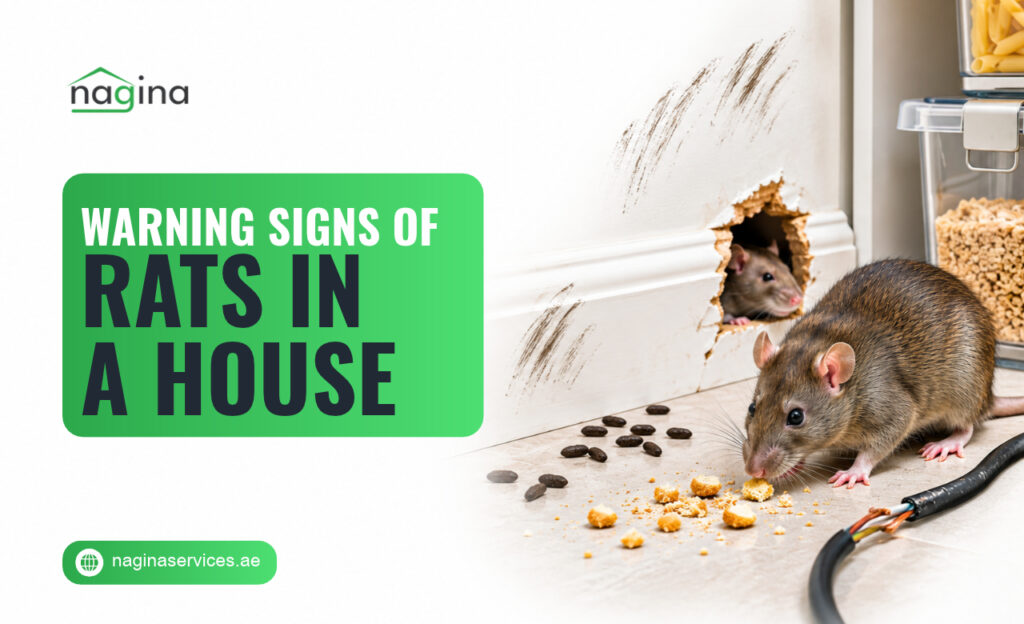
Droppings are the most common and the most reliable sign of rats. Rat droppings are dark brown or black, shaped like small capsules, and usually found in groups. Fresh droppings look soft and shiny, while old ones turn grey, dry, and crumbly.
Check the places where rats travel and feed, such as the back of kitchen cupboards, under the sink, behind the fridge, inside storage rooms, and along walls. Mouse droppings look similar but are much smaller, about the size of a grain of rice, so size helps you tell which pest you have.
Droppings also show how active the rats are. A few old, dry droppings may mean a past visit, but fresh droppings every day mean the rats are still here and feeding.
This is very dangerous. Rat droppings can carry germs that cause serious illness, and dried droppings break into dust that is easy to breathe in. Never sweep them with a broom, never touch them with bare hands, and do not try to clean a large area yourself.
Explore our Rodent pest control services in Dubai, UAE, to remove the rats and clean the affected areas safely.
2. Urine Stains and a Strong Smell
A sharp, musty smell like ammonia is a common sign of rats, especially in closed spaces such as cupboards, storage rooms, and the area behind appliances. The smell gets stronger as the number of rats grows.
Rat urine also leaves dark, dried stains on cardboard, fabric, and floors, and rats often urinate along the paths they use. These marks are easy to miss in poor light, so check corners and low areas with a torch.
The smell can stay even after you clean the surface, because urine soaks into wood, boxes, and insulation. If a strange odour keeps returning, something is probably living or nesting nearby.
Dried rat urine glows under an ultraviolet light, which is how professionals trace rat paths in dark areas. Pet accidents and some household stains glow as well, so this works only as a hint and not as proof.
3. Scratching and Noises at Night
Rats are most active at night, so this is when you are most likely to hear them. Listen for scratching, scurrying, squeaking, and light thumping sounds after the house goes quiet.
These signs of rats in the house at night are often the first warning people notice. A rat moving along a pipe, a cupboard shelf, or a ceiling cavity makes a repeated, scratchy sound that is very different from the creaks of a normal house.
Common nighttime sounds include:
- Scratching or scraping inside walls
- Quick running or scurrying overhead
- Gnawing on wood, plastic, or pipes
- Squeaking or chattering when rats fight or call each other
If you hear noises every night around the same time, it is a clear sign that rats have settled in and found a regular route. Do not ignore it, because the sounds usually get louder as the group grows.
4. Signs of Rats in Walls, Ceiling, and Loft
Rats love hidden spaces, and walls, ceilings, and the loft or attic are some of their favourite places. If you hear scratching or running sounds inside a wall, or above the ceiling at night, rats are likely using the gap behind it as a travel route.
Look for these signs of rats in the ceiling, attic, or roof space:
- Brown stains or dark smears on the ceiling
- Droppings, nesting material, or shredded insulation in the loft
- Small holes around pipes and cables where they pass through the ceiling
- A musty smell coming from above
In villas and larger homes, the space above a false ceiling is a common hiding place. Because you cannot see inside walls and ceilings, these signs often point to a bigger infestation than you expect.
5. Gnaw Marks and Damaged Items
Rats have teeth that never stop growing, so they chew constantly to keep them short. Look for gnaw marks on wood, plastic, cardboard, soap, and food packets, and for small holes chewed into boxes and bags.
Pay close attention to wires and cables. Rats often chew electrical wires, which can cause short circuits and even fires, so a chewed cable is both a pest sign and a safety hazard.
Fresh gnaw marks look pale and clean, while old ones are darker. If you find new damage that was not there a few days ago, the rats are active right now.
Check your food storage as well. Ripped bags of rice, flour, or pet food, chewed packets, and spilled grains in a cupboard are strong signs that rats have found a steady supply of food.
6. Rat Nests
Rats build nests in warm, quiet, hidden spots, using soft material they find around the house. A nest is usually a rough ball of shredded paper, cloth, cardboard, insulation, or dried plant material.
Check the corners of storage rooms, the back of cupboards, gaps behind appliances, garages, and the roof space. A nest often comes with droppings, urine stains, and a musty smell nearby.
Finding a nest means the rats are not just passing through. They are breeding, and a female rat can have several litters a year, which means the problem can grow fast.
Do not disturb a nest yourself. Rats can bite when they feel cornered, and disturbing old nesting material and droppings can release harmful dust into the air.
7. Grease Marks and Rub Marks Along Walls
Rats have oily, dirty fur, and they tend to run along the same paths close to walls. Over time, this leaves dark, greasy smears along the base of walls, around holes, and along pipes.
These marks are easiest to see on light coloured walls and near gaps where the rats squeeze through. You may also notice footprints or tail drag marks in dusty areas, such as storerooms or garages.
If you sprinkle a thin layer of flour or talcum powder along a suspected path, you may see tracks the next morning. Grease marks and tracks show you where the rats travel, which helps in locating entry points.
8. Burrows and Holes Outside the House
Not all rats nest indoors. Some species dig burrows in the ground, and these are often found close to the house. Signs of rats outside include holes about the size of a golf ball near walls, under bushes, along fences, and beneath sheds or decks.
Check the garden and yard for these signs of rats:
- Holes with smooth, worn edges
- Flattened paths in grass or soil
- Gnawed fruit, nuts, or pet food
- Droppings near bins or compost areas
Rubbish bins, pet food, and bird feed attract rats close to the home, and from there they find their way inside through gaps and vents.
Some rats also climb. They use trees, palms, pipes, and cables to reach balconies and roofs, so check any branches that touch the building.
9. Signs of Rats in Drains
Rats can travel through damaged drain pipes and sewers, and they sometimes enter the home through them. Signs of rats in drains include scratching or squeaking sounds in the pipes, slow draining, and a strong sewer smell.
You might also find droppings or chewed material near drain covers, or notice that a toilet or sink gurgles for no clear reason. Broken or uncovered drains in the garden are another common entry point.
Drain problems are hard to fix without the right equipment, and they can point to a bigger issue in the pipes beneath the property.
Check that drain covers are in place and fit tightly, and look for gaps around the pipes where they enter the walls. Even a small gap is enough for a rat to squeeze through.
Get Rid of Rats Before the Problem Grows
If you recognise even a few of these signs, do not wait. Rats breed quickly, damage wires and property, and spread germs through food and surfaces, and a small problem can turn into a serious infestation very fast.
Nagina Services is a licensed and certified pest control company. Our trained technicians find where the rats are entering, remove them safely, and seal the weak points so they do not return. Get in touch through the contact options on our website to book an inspection today.