
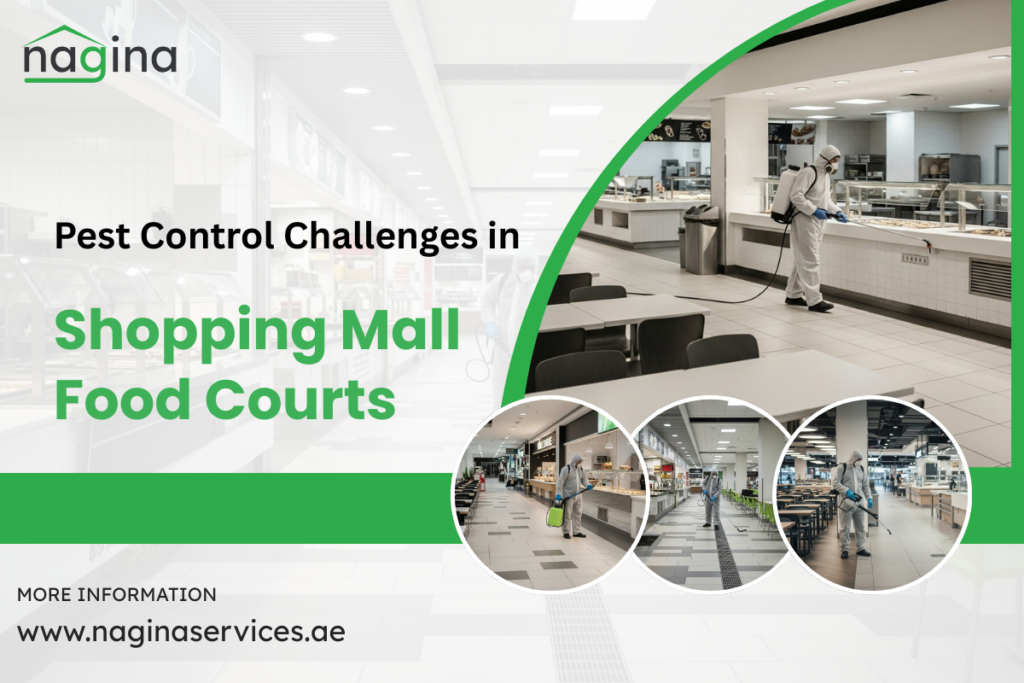
Shopping mall food courts are busy locations in which more than one restaurant functions together and serves a large quantity of customers each day. At the same time as they offer convenience and variety, they also create critical challenges for maintaining hygiene and controlling pests. Due to steady food management and excessive customer traffic, pest issues can expand fast if proper control is maintained.
1. High Foot Traffic and Food Spillage
Food courts experience continuous movement of human beings, which leads to common spills and food waste on tables and flooring. Even small meal particles can attract pests very quickly.
Common problems include food crumbs, spilled drinks, and overflowing bins all through peak hours. These situations make it easy for ants, cockroaches, and flies to survive and multiply.
2. Multiple Food Outlets in One Area
A major challenge is that many food outlets share the same area. If one outlet does not keep proper hygiene, pests can easily spread to others.
- Shared seating areas boom infection danger
- Waste disposal areas are normally utilized by all outlets
- Inconsistent cleaning practices create weak points
This makes coordinated pest control very important.
3. Hidden Grease and Waste Build-Up
Grease and meal particles frequently collect in hidden regions including behind the system, beneath counters, and interior drainage structures. Those areas aren’t cleaned often and end up perfect breeding spots for cockroaches and different pests.
4. Waste Management Issues
Improper waste management is one of the largest causes of pest issues in food courts. Overflowing boxes and unsealed rubbish luggage attracts the rodents and flies in no time.
Delays in waste series and terrible segregation of food waste further increase the chance of infestation.
5. Complex Structure of Shopping Malls
Shopping malls have more than one hidden area consisting of provider corridors, ducts, and basements. Those areas are hard to display and clean frequently, making them safe hiding spots for pests.
As soon as pests enter these areas, they can move without difficulty through ventilation structures and drainage strains.
6. Continuous Food Availability
Unlike other commercial areas, food courts function for long hours and constantly prepare meals. This ensures that pests usually have the right to entry to meals sources, making complete prevention difficult.
Even after cleansing, fresh food preparation continues, which keeps attracting pests throughout the day.
7. Rapid Spread of Infestations
Due to the close location of restaurants, pests can spread quickly from one outlet to every other. A small difficulty in one shop can emerge as a larger hassle in the whole food court if no longer controlled early.
8. Limited Time for Deep Cleaning
Deep cleansing is tough due to the fact that meals courts cannot close down for long periods. Cleansing groups often have constrained time, which can result in missed areas where pests can hide and grow.
9. Importance of Professional Pest Control
Due to these demanding situations, professional pest control offerings are critical for retaining hygiene in food courts. Specialists use secure and powerful methods to control pests without disrupting daily operations.
Ordinary inspections and preventive treatments help reduce dangers and preserve the environment clean and safe.
Conclusion
Pest control in shopping mall food courts is highly challenging due to constant food interest, shared areas, hidden waste, and complicated structures. Without right control, even a small pest of difficulty can quickly develop into an extreme problem affecting customers and business reputation.
For reliable and professional pest control solutions, Nagina Pest Control offers expert offerings designed to maintain commercial food environments smooth, safe, and pest-free.