
A quiet home can hide a lot. Pests rarely announce themselves the moment they move in, and by the time you spot one crawling across the kitchen counter in broad daylight, there’s usually a much larger colony operating somewhere out of sight. Knowing the early warning signs can save you from property damage, health risks, and a much bigger bill down the line.
Dubai’s warm climate, high-humidity months, and dense urban living make homes and businesses across the city especially attractive to pests. Cockroaches, rodents, ants, termites, and bed bugs all thrive in the region’s conditions, which is why catching the signs early matters more here than in most places.
Below are the clearest indicators that it’s time to stop reaching for store-bought sprays and call in a professional pest control team.
Explore our Best Pest Control Services in Dubai, UAE
1. Droppings or Urine Stains
Rodent and insect droppings are one of the most reliable signs of an active infestation. Mice and rats leave small, dark, pellet-shaped droppings near food sources, along skirting boards, or inside cabinets and drawers. Cockroaches leave similar but smaller markings that resemble ground coffee or black pepper.
- Fresh droppings near pantry shelves or under the sink point to an active feeding site
- Urine stains that glow under UV light are a strong indicator of a rodent presence, even if you haven’t seen droppings
- A musty, ammonia-like smell in enclosed spaces often accompanies heavier infestations
Finding even a small amount of droppings usually means the pest population is larger than what’s visible, since these animals and insects tend to hide during the day and forage at night.
2. Unusual Sounds Inside Walls or Ceilings
Scratching, scurrying, or gnawing sounds coming from walls, attics, or ceiling voids are a classic sign of rodents or, in some cases, larger insects. These sounds are typically more noticeable at night when the house is quiet and pests are most active, and they often trace a repeated path, such as along a ceiling line or down a specific section of wall, as the animal moves between its nest and a food source.
Gnawing sounds in particular are worth taking seriously, since rodents need to continuously wear down their teeth and will chew through wood, insulation, and even piping to do so.
Termites produce a different kind of sound. A soft clicking or tapping noise from within wooden structures can indicate soldier termites signaling danger to the colony, though this is harder to detect without professional listening equipment.
Some people describe it as a faint rustling or papery sound coming from behind walls or skirting boards, which is the worker termites feeding just beneath the surface. Because the noise is so subtle and easy to mistake for normal household settling, it’s often overlooked until the damage becomes visible.
3. Visible Damage to Wood, Wiring, or Furniture
Structural damage is often the most expensive consequence of a delayed pest response. Termites feed on cellulose, which means wooden furniture, skirting boards, door frames, and even paper products are all at risk.
- Hollow-sounding wood when tapped, or wood that crumbles easily, suggests termite activity
- Small holes or tunnels in furniture legs and frames often mean woodboring insects
- Chewed electrical wiring is a common sign of rodents and poses a serious fire hazard
- Blistered or peeling paint on wood surfaces can indicate moisture damage caused by termite tunnels underneath
Because termite damage builds up silently over months or years, many property owners only discover it once it has already compromised a structural element.
4. Discarded Wings or Shed Skins
Flying termites, known as swarmers, shed their wings after finding a new nesting site. Piles of small, translucent wings near windowsills, doors, or light fixtures are one of the clearest signs of a termite colony nearby, especially during the warmer months when swarming activity increases.
A swarm event usually means a mature colony is already established somewhere close by, since termites only send out reproductive swarmers once a nest has grown large enough to expand.
Bed bugs and cockroaches leave shed exoskeletons as they grow. Finding these small, translucent shells in mattress seams, behind headboards, or in cracks near baseboards points to a growing population rather than an isolated visitor.
Since both insects molt several times before reaching adulthood, discovering shells of different sizes in the same area is a fairly reliable sign that multiple generations are already living and breeding in that spot.
5. Nests or Egg Sacs in Hidden Corners
Pests build nests wherever they feel safe and undisturbed, which usually means places homeowners rarely check.
- Cockroach egg cases, called oothecae, are often tucked behind appliances, inside cardboard boxes, or in cabinet corners
- Rodent nests made from shredded paper, fabric, or insulation typically appear in attics, wall cavities, or storage areas
- Ant nests can form indoors near moisture sources, particularly around bathrooms and kitchens, or outdoors near the foundation
Spotting a nest is a strong signal that the infestation has moved past the early stage and needs immediate attention.
6. Grease Marks and Rub Marks Along Walls
Rodents have poor eyesight and rely on their whiskers and body to guide them along familiar paths, usually close to walls and skirting boards. This behavior, known as thigmotaxis, means they instinctively keep their fur in constant contact with a vertical surface as they move, which is why their trails rarely cross open floor space.
Over time, the natural oils and dirt on their fur leave dark, greasy smudges along these regular travel routes, and the marks tend to build up most heavily at corners, pipe entry points, and gaps under doors where the animal pauses or squeezes through.
These marks are easy to miss unless you’re specifically looking for them, since they can resemble ordinary wall grime at first glance. A useful way to check is to look at skirting board height in dimly lit areas such as under sinks, behind appliances, or along garage walls, where the smudges tend to be darkest.
Finding fresh, dark marks rather than faded ones is a dependable sign that rodents are moving through your space regularly rather than having passed through weeks ago.
7. A Sudden Increase in Bites or Skin Irritation
Waking up with unexplained bites, especially in a line or cluster pattern, is one of the more uncomfortable signs of an infestation. Bed bugs feed at night and leave small, itchy welts, often on arms, legs, and the neck. Mosquitoes, fleas, and mites can produce similar symptoms.
If bites appear regularly despite good hygiene and no clear outdoor exposure, it’s worth inspecting mattress seams, furniture joints, and pet bedding closely, or having a professional do a thorough check.
8. Strange or Persistent Odors
Every pest problem tends to come with a distinct smell once the population grows large enough.
- A musty, damp odor can point to cockroaches or termites
- An oily, decaying smell may indicate a dead rodent trapped within a wall cavity
- A sweet, musty scent is often associated with bed bug infestations
Odors are usually one of the later signs to appear, meaning the infestation has likely been building for some time before it became noticeable.
9. Pet Behavior Changes
Cats and dogs often notice pests before their owners do. A pet that suddenly becomes fixated on a particular wall, corner, or piece of furniture, sniffing, scratching, or staring intently, may be picking up on movement or scent that humans can’t detect. Persistent scratching or unusual restlessness at night is worth paying attention to, particularly if it’s a new behavior.
10. Seeing Live Pests During the Day
Many common household pests, especially cockroaches and rodents, are naturally nocturnal and avoid open spaces when people are around. They spend daylight hours tucked into cracks, voids, and cluttered storage areas, only coming out to feed once the lights are off and the space is quiet.
Spotting them out in the open during daylight hours usually means the population has grown large enough that there isn’t sufficient shelter or food to keep them hidden anymore, so weaker or more subordinate individuals get pushed out into visible areas to forage.
This is generally considered a sign of a moderate to severe infestation rather than an early warning, since a healthy colony with enough resources rarely needs to expose itself this way. If daytime sightings are becoming a regular occurrence rather than a one-off, it’s worth assuming the nest is well established and treating the situation as urgent rather than waiting to see if it happens again.
Why DIY Methods Often Fall Short
Store-bought sprays and traps can manage the occasional stray insect, but they rarely reach the source of an infestation. Pests like termites and cockroaches build nests deep within walls, foundations, and hard-to-reach voids, and treating only what’s visible tends to push the colony further inward rather than eliminating it.
Repeated spraying can also make certain pests, particularly cockroaches, more resistant to common over-the-counter chemicals over time, which makes each future application less effective than the last.
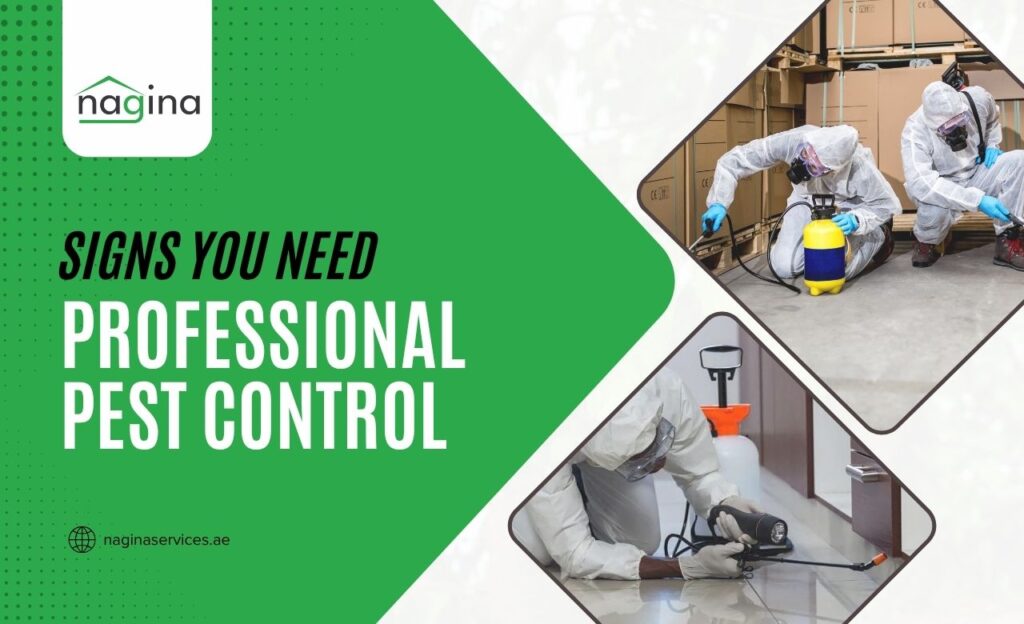
Professional treatments work differently because they start with an inspection rather than a guess. A trained technician identifies the species involved, traces the infestation back to its entry points and nesting sites, and selects a treatment method suited to that specific pest and property type.
This usually means targeted baiting, dust or gel treatments in void spaces, or growth regulators that interrupt breeding cycles, paired with a follow-up visit to confirm the colony has actually been eliminated rather than just temporarily suppressed. That combination of accurate diagnosis, proper-grade products, and scheduled follow-up is what addresses the root of the problem instead of just the symptoms on the surface.
Get in Touch With Nagina Services
If any of these signs sound familiar, it’s a good time to bring in a professional rather than wait for the problem to grow. Nagina Services is an ISO-certified cleaning and pest control company based in Dubai, offering eco-friendly and effective treatments for termites, bed bugs, rodents, cockroaches, ants, mosquitoes, and more, across homes, offices, and commercial spaces throughout the UAE.
Our trained team inspects the source of the problem, not just the visible symptoms, and delivers long-lasting results backed by years of local experience. Reach out to Nagina Services today for a free quote and let our experts restore a clean, pest-free environment to your home or business.