
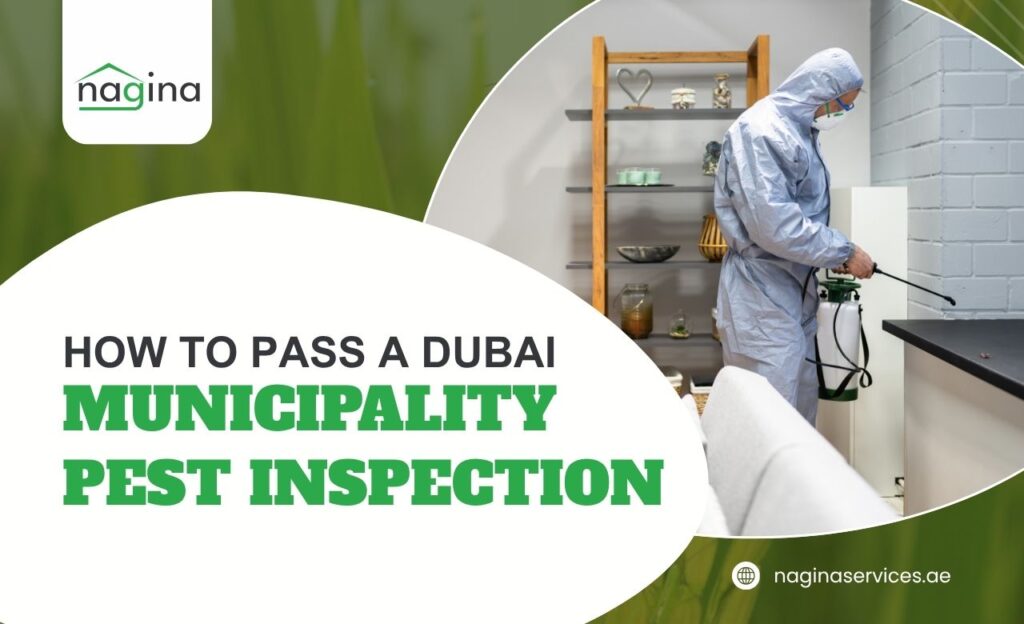
Dubai Municipality inspections are not something a business can prepare for the night before. Whether you run a restaurant, a hotel kitchen, a warehouse, or a retail outlet, pest control compliance is checked as a routine part of every food safety and hygiene visit, and it’s one of the categories most likely to trigger a fine or a temporary closure if it isn’t handled properly.
Passing an inspection comes down to having the right contractor in place, the right paperwork ready, and the right habits built into daily operations well before an inspector walks through the door.
Here is the break down what Dubai Municipality actually looks for during a pest control inspection :
Why Pest Control Compliance Matters So Much in Dubai
Dubai’s food safety framework treats pest management as a public health issue rather than a cosmetic one. Any premises that handle, store, or serve food, including restaurants, cafes, catering companies, cloud kitchens, hotels, and food warehouses, are required to maintain an active pest control contract with a Dubai Municipality-approved provider.
This isn’t a formality that gets checked once when a business first opens. Inspections are unannounced and recurring, and pest control compliance is reviewed every time a municipality officer visits, alongside food storage temperatures, staff hygiene certifications, and general cleanliness.
Explore our Best Pest Control Services in Dubai, UAE
The consequences of failing this part of an inspection can be severe. Depending on the nature and severity of the issue, penalties can range from a few hundred dirhams for minor documentation gaps to tens of thousands of dirhams for serious infestations, and a business found with active pest activity during a critical inspection can be shut down on the spot until the problem is resolved and re-verified.
For a working restaurant or hotel, even a short closure tends to cost far more in lost revenue and staff wages than the fine itself, which is why prevention is always cheaper than remediation.
Work Only With a Dubai Municipality-Approved Pest Control Company
The single most important step toward passing an inspection is making sure your pest control provider is properly licensed. Dubai Municipality only recognizes companies that hold a valid municipal approval and employ technicians carrying individual Dubai Municipality ID cards confirming their training and certification.
Working with an unlicensed or unregistered operator, even if their pricing looks attractive, puts your compliance status at risk regardless of how good the actual treatment is, because inspectors will ask for proof of the contractor’s approval status as a standard check.
It’s worth asking any prospective provider to show their municipal license number and confirm that their technicians carry valid ID cards before signing a contract. A reputable company will have no hesitation sharing this information, since it’s a standard part of doing business in a regulated sector.
Register Your Pest Control Contractor on FoodWatch
For food businesses specifically, having a signed contract with a licensed provider is not enough on its own. Dubai Municipality requires the relationship between a food establishment and its pest control contractor to be formally recorded in the FoodWatch digital platform, which links suppliers to registered premises.
A business can have a fully valid paper contract and still fail this part of an inspection if the contractor was never linked to the property inside the system. It’s worth confirming directly with your provider that this registration step has actually been completed rather than assuming it happens automatically once a contract is signed.
Keep Detailed and Compliant Service Records
Documentation is where many otherwise well-managed properties lose points during an inspection. A pest control log needs to be kept on site and made available immediately when requested, and Dubai Municipality generally expects these records to be retained for at least two years, whether in physical or digital form.
A properly compliant treatment certificate should include:
- The date and time of the visit
- The technician’s name and municipal ID number
- The exact product used, along with its active ingredient and concentration
- The treatment method applied
- Any pest activity the technician observed
- The contractor’s license number
A certificate that leaves out any of these details does not satisfy inspection requirements, even if the treatment itself was carried out correctly, so it’s worth reviewing your records periodically rather than only checking them when an inspection is announced.
Follow the Correct Treatment Frequency for Your Property Type
Different areas of a commercial property carry different levels of pest risk, and Dubai Municipality’s expectations reflect that. Kitchens, food preparation zones, and bin or refuse storage areas are typically expected to receive monthly treatment given how much food waste and moisture they generate.
Cold storage rooms, service corridors, and staff areas are usually treated on a slightly longer cycle, often every two months, while lower-risk zones such as outdoor terraces or loading bays may only need quarterly attention depending on the specific risk assessment for that site.
Residential properties are held to a lighter standard, though property managers and landlords are still encouraged to arrange preventive treatments every three to four months to avoid larger infestations building up between visits.
Matching your treatment schedule to your property type, rather than applying a single generic frequency across every space, tends to be what separates businesses that pass comfortably from those that scramble before every visit.
Address Structural and Sanitation Issues Before They Become Pest Problems
Inspectors don’t only look for pests themselves. They also assess the conditions that tend to invite pests in the first place, since prevention is treated as part of compliance rather than an optional extra.
- Gaps around doors, service pipes, and drainage points should be sealed, since these are the most common entry routes for rodents and crawling insects
- Waste storage areas need proper bins with tight-fitting lids and a consistent removal schedule to avoid attracting pests overnight
- Food storage should keep raw ingredients properly sealed and elevated off the floor, since exposed food is one of the fastest ways to draw in cockroaches and rodents
- Drainage and grease traps should be cleaned on a routine basis, as blocked or greasy drains are a common breeding ground for flies
Addressing these underlying conditions does more to prevent a failed inspection than any single treatment visit, since a clean, well-sealed property naturally supports whatever pest control program is already in place.
Prepare Staff for the Inspection Itself
Inspectors will often ask staff directly whether they know who the pest control provider is, when the last treatment happened, or where the service log is kept. A team that can answer these questions confidently reflects well on the overall management of the property.
While confused or inconsistent answers can prompt a more thorough review even when the actual pest control program is compliant. It’s worth briefing whoever is likely to be on shift, particularly kitchen supervisors and facility managers, on where records are stored and who to direct the inspector to if needed.
Common Reasons Businesses Fail Pest Control Inspections
Understanding where other businesses typically go wrong makes it easier to avoid the same mistakes.
The most frequent issues include:
- Visible pest activity that wasn’t reported or addressed between scheduled visits
- Treatment certificates missing required details such as the technician’s ID or the product used
- Contracts with providers who were never properly registered on FoodWatch
- Service logs that haven’t been updated or kept on site consistently
In most cases, these are administrative gaps rather than a failure of the actual pest control work, which means they’re also the easiest issues to fix once a business knows to look for them.
Get Inspection-Ready With Nagina Services
Passing a Dubai Municipality pest inspection isn’t about last-minute preparation. It comes down to working with a properly licensed provider, keeping accurate records, following the right treatment schedule for your property, and staying on top of the sanitation habits that keep pests from returning.
Nagina Services is an ISO-certified pest control and cleaning company based in Dubai, and our team works with restaurants, hotels, warehouses, and commercial properties across the UAE to build compliant treatment programs, maintain full documentation, and keep every certificate inspection-ready year round.
Get in touch with Nagina Services today to set up a pest control program that keeps your business protected and fully compliant, inspection after inspection.